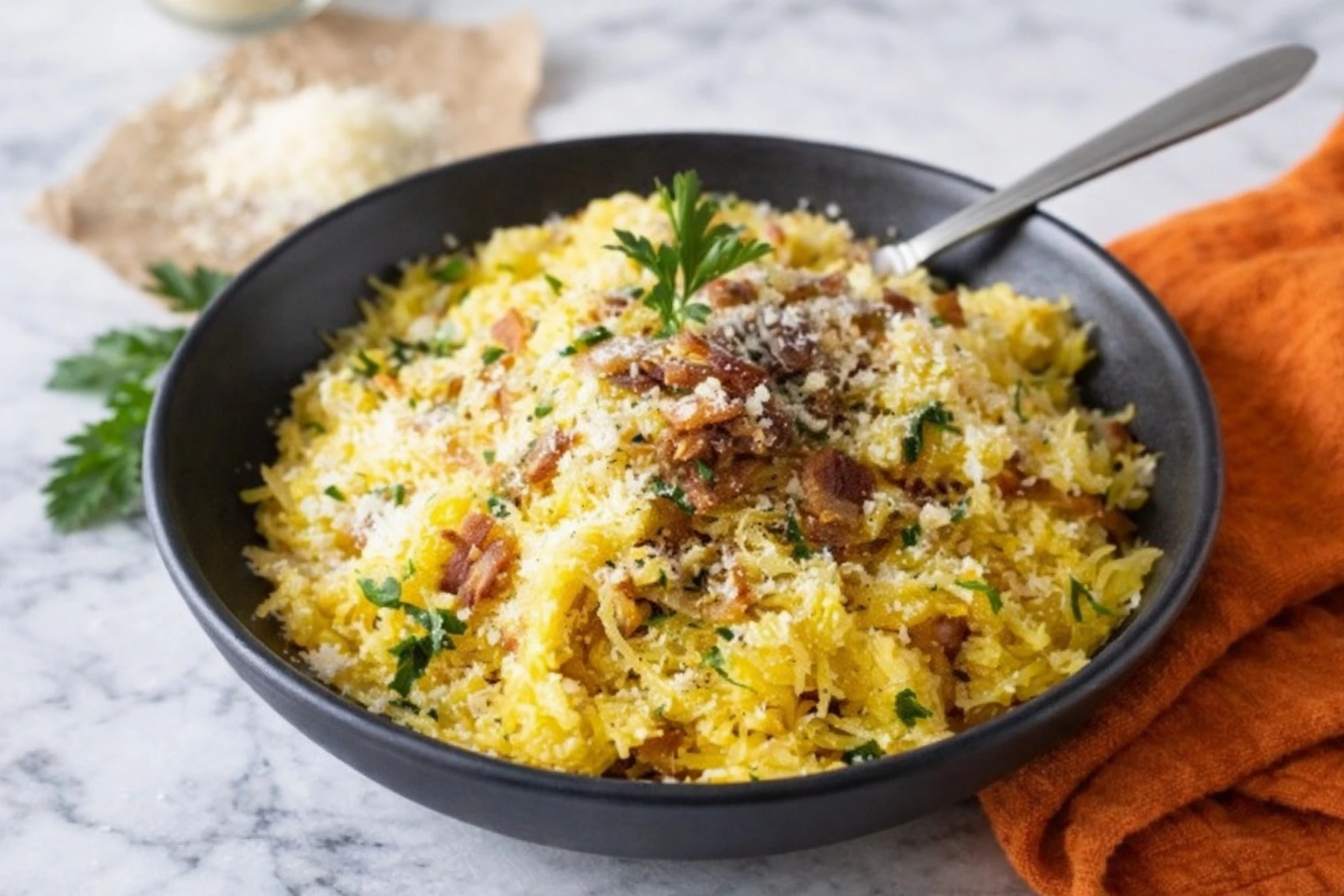
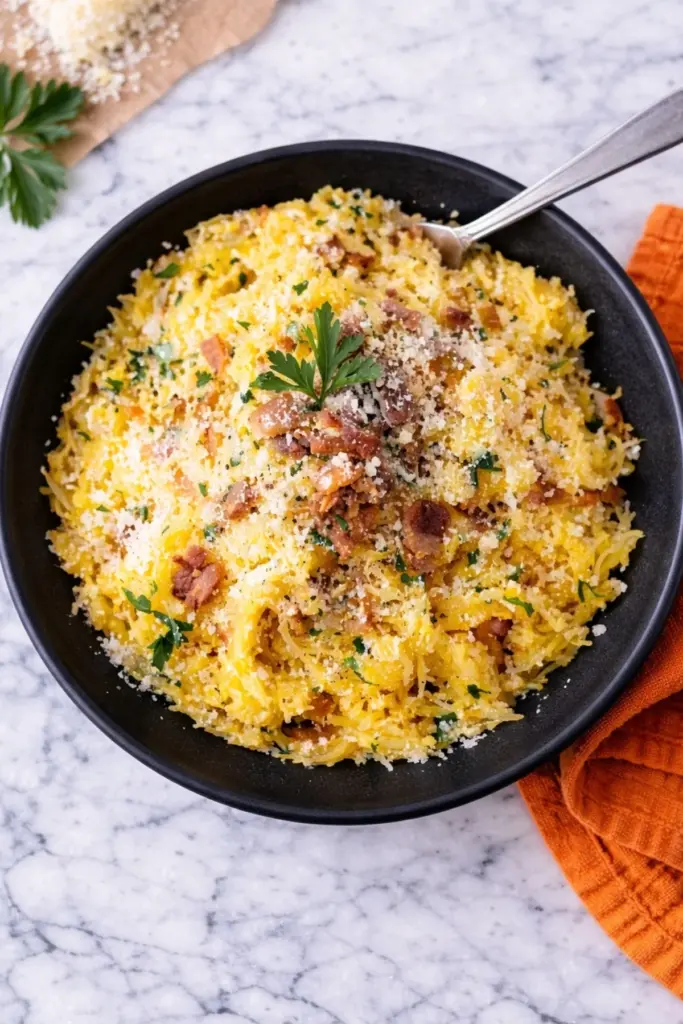
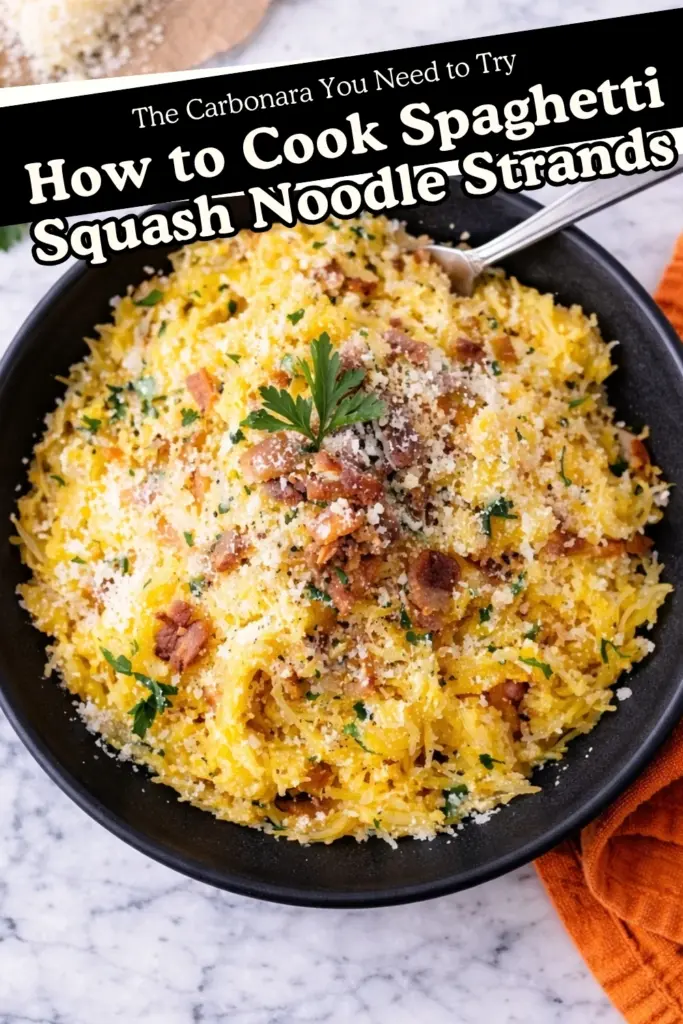
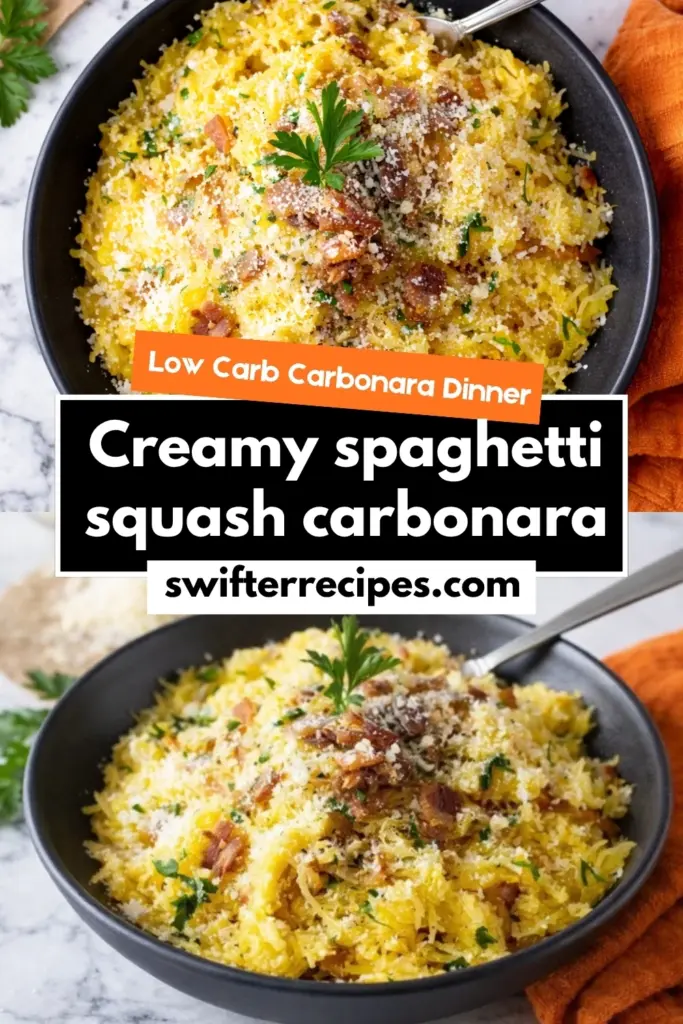
How to Cook Spaghetti Squash is easier than it looks, and it makes such a good pasta swap. If you have never tried it before, this is a great recipe to start with. Once roasted, the squash turns into tender golden strands that look a lot like noodles. Mixed with creamy carbonara sauce, crispy pancetta, and Parmesan, it becomes a simple dinner that feels cozy and special.
This recipe is gluten free, lower in carbs than regular pasta, and still filling enough for dinner. It is a nice choice if you are eating keto, trying more spaghetti squash recipes, or just want a different way to serve vegetables. It takes about an hour from start to finish, and most of that time is hands off.
In this post, you will learn how to cook spaghetti squash step by step, plus a few easy tips for choosing, roasting, and serving it the best way.
What Is Spaghetti Squash and Why Should You Cook With It
Spaghetti squash is a pale yellow, oblong winter squash. When you roast it and scrape the inside with a fork, the flesh separates into thin, noodle-like strands. That is where the name comes from.
It has a mild, slightly sweet flavor that pairs well with bold sauces. It works beautifully in place of pasta in dishes like carbonara, and it holds up well to heat. If you have been looking at spaghetti squash in the produce aisle and wondering what to do with it, this is your sign to just go for it.

For another take on this versatile vegetable, check out this stuffed spaghetti squash recipe that makes the most of the squash as its own edible bowl.
How to Cook Spaghetti Squash in the Oven
This is the most reliable and hands-off method. Here is how to do it.
What you need:
- 1 medium spaghetti squash
- 1 tablespoon olive oil
- Salt and pepper
Steps:
- Preheat your oven to 400 degrees F.
- Cut the squash in half lengthwise using a sharp, sturdy knife. This can take a little effort. If the squash feels hard to cut, microwave it whole for 3 to 4 minutes first to soften the skin.
- Scoop out the seeds and stringy pulp from the center using a large spoon.
- Drizzle the cut sides with olive oil and season lightly with salt and pepper.
- Place the halves cut-side down on a lined baking sheet.
- Roast for 35 to 40 minutes, until the skin is lightly golden and the flesh feels tender when you press it.
- Let it cool for about 5 minutes, then use a fork to scrape the flesh into strands.
The key to learning how to cook spaghetti squash well is not to overcook it. If the strands turn mushy, they will not hold up in a sauce. You want them just tender with a little bite.
If you love roasted squash in general, this parmesan herb roasted acorn squash is another great side dish to keep in your rotation.
How to Make Spaghetti Squash Carbonara
Now the fun part. This is where the roasted squash becomes dinner.
Ingredients:
- 1 medium spaghetti squash (roasted as above)
- 1 tablespoon olive oil
- 4 ounces pancetta, diced
- 2 cloves garlic, minced
- 2 large eggs
- 1/2 cup grated Parmesan
- 1/4 teaspoon salt
- 1/4 teaspoon black pepper
- Fresh parsley for garnish
Instructions:
- While the squash roasts, heat the remaining olive oil in a skillet over medium heat. Add the pancetta and cook until crispy, about 5 to 7 minutes.
- Stir in the minced garlic and cook for 30 seconds more, then remove the pan from heat.
- In a bowl, whisk together the eggs, Parmesan, salt, and pepper until smooth.
- When the squash is ready, scrape out the hot strands directly into the skillet with the pancetta.
- Pour the egg and cheese mixture over the hot strands and toss quickly. The heat from the squash will cook the eggs gently and create a creamy, glossy sauce.
- Divide among plates and serve right away with extra Parmesan and fresh parsley.
The timing here matters. Toss while everything is still hot so the eggs coat the strands instead of scrambling. Work fast and keep stirring.
Tips for Getting That Creamy Sauce Right
Carbonara sauce is made with eggs and cheese, no cream involved. The creaminess comes entirely from the emulsion between the eggs, fat from the pancetta, and the starchy heat of the squash.
A few things that help:
- Do not add the egg mixture over direct heat. Pull the pan off the burner first.
- Work quickly and toss constantly so the eggs do not clump.
- Use freshly grated Parmesan, not pre-shredded. It melts into the sauce much better.
- If the sauce feels too thick, add a tablespoon of hot water to loosen it up.
If you enjoy creamy pasta dishes with a similar technique, this bucatini cacio e pepe uses the same egg and cheese magic and is worth bookmarking.
Easy Variations to Try
One of the best things about this recipe is how easy it is to adapt. Here are a few directions you can take it.
Spaghetti Squash Carbonara with Chicken
Add sliced cooked chicken breast to the skillet with the pancetta. It makes the dish more filling and adds extra protein. Check out these easy chicken breast recipes if you need inspiration for how to prep the chicken.
Spaghetti Squash Carbonara with Peas
Stir in a handful of cooked peas when you add the squash strands to the skillet. They add a pop of color and a touch of sweetness that works really nicely. If you want a simple way to prepare peas as a side, this peas and carrots recipe is quick and classic.
Spaghetti Squash Carbonara Vegetarian
Skip the pancetta entirely. Instead, use a tablespoon of olive oil and add a little smoked paprika for depth. You can also add sauteed mushrooms for that savory, satisfying bite. The result is a spaghetti squash carbonara vegetarian version that still tastes rich and indulgent.
Spaghetti Squash Carbonara with Cream Cheese
For an even richer sauce, whisk a tablespoon of softened cream cheese into the egg mixture before adding it to the squash. It makes the sauce extra thick and velvety, similar to a cottage cheese pasta approach. Speaking of which, this cottage cheese pasta is another great high-protein pasta swap to explore.
Spaghetti Squash Carbonara Keto
This recipe is already naturally keto-friendly since it uses no pasta and no starchy thickeners. The egg and cheese sauce is all fat and protein. Skip the peas if you are keeping carbs very low and you are good to go.
Is This Recipe Really Low Carb
Yes, absolutely. Regular pasta carbonara can have 60 grams of carbs or more per serving. Spaghetti squash carbonara comes in at roughly 10 to 12 grams of net carbs per serving, depending on portion size. That is a huge difference if you are following a low carb or keto plan.
It is also naturally gluten free, which makes it a great option for people who have trouble with wheat pasta. And honestly, even if you are not watching carbs at all, it is just a really good dinner.
If you enjoy lighter pasta-style meals, this creamy pasta primavera and this spring pea pesto pasta are two more veggie-forward dinners that feel indulgent without being heavy.
Common Mistakes to Avoid
Cutting the squash before it is stable. Always set the squash flat on a cutting board. If it rolls, you can trim a small slice off one end to create a flat base before slicing.
Overcooking the squash. If the strands are watery and soft, they will not hold the sauce. Pull the squash from the oven when it is just tender.
Adding eggs over high heat. This is the number one reason carbonara gets scrambled. Take the pan off the heat, then add the egg mixture.
Letting the squash sit too long before tossing. The sauce emulsifies best when the squash is still very hot. Have everything ready before you start scraping the strands.
How to Store and Reheat
Store any leftovers in an airtight container in the fridge for up to 3 days. The sauce will firm up as it cools, which is normal.
To reheat, warm the squash gently in a skillet over low heat with a small splash of water. Stir often so it heats evenly without drying out. Avoid the microwave if you can because it tends to make the egg sauce rubbery.
Freezing is not recommended. The squash strands release a lot of water when thawed and the texture suffers.
FAQs
Do I have to cut the spaghetti squash before roasting?
Yes, cutting it in half before roasting is the best approach for this recipe. It roasts faster and you can scrape out the strands more easily when it is done.
Can I make spaghetti squash carbonara ahead of time?
It is best served fresh, but you can roast the squash and cook the pancetta ahead of time. Store them separately and combine with the egg sauce just before serving.
What can I use instead of pancetta?
Bacon is the easiest substitute and works just as well. You can also use guanciale if you can find it, which is the traditional choice for Italian carbonara.
How do I know when the spaghetti squash is fully cooked?
Press the skin gently with your finger. It should give slightly, not feel hard. You can also insert a fork into the flesh and it should slide in without resistance. The strands should scrape away easily and cleanly.
Conclusion
Learning how to cook spaghetti squash opens the door to a whole new category of lighter, satisfying dinners. This carbonara recipe is one of the best places to start. It is simple, it feels special, and it proves that eating well does not have to mean giving up the foods you love.
Give it a try and make it your own. Add chicken, toss in some peas, go vegetarian, or keep it classic with just the pancetta. Any way you make it, those golden squash strands in a creamy Parmesan sauce will make you very glad you gave this vegetable a chance.
If this recipe made your day a little sweeter, please leave a star rating in the recipe card below and save it to Pinterest for later.
Print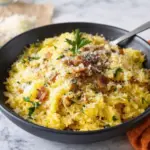
How to Cook Spaghetti Squash carbonara
- Total Time: 55 minutes
- Yield: 4 servings 1x
- Diet: Gluten Free
Description
A lighter twist on classic carbonara, this spaghetti squash version is creamy, cozy, and packed with crispy pancetta and Parmesan in every bite.
Ingredients
- 1 medium spaghetti squash
- 2 tablespoons olive oil
- Salt and pepper
- 4 ounces pancetta, diced
- 2 cloves garlic, minced
- 2 large eggs
- 1/2 cup grated Parmesan
- Fresh parsley, for garnish
Instructions
- Preheat the oven to 400 degrees F.
- Cut the spaghetti squash in half lengthwise and scoop out the seeds and stringy pulp.
- Drizzle the cut sides with 1 tablespoon olive oil and season lightly with salt and pepper.
- Place the squash halves cut-side down on a lined baking sheet.
- Roast for 35 to 40 minutes, until tender but not mushy.
- While the squash roasts, heat the remaining 1 tablespoon olive oil in a skillet over medium heat.
- Add the pancetta and cook until crispy, about 5 to 7 minutes.
- Stir in the minced garlic and cook for 30 seconds, then remove the pan from the heat.
- In a bowl, whisk together the eggs, Parmesan, salt, and black pepper until smooth.
- When the squash is ready, let it cool for 5 minutes, then scrape the flesh into strands with a fork.
- Add the hot squash strands to the skillet with the pancetta.
- Pour the egg and cheese mixture over the hot strands and toss quickly until creamy and glossy.
- Serve right away with fresh parsley and extra Parmesan if desired.
Notes
Do not overcook the squash or it will turn watery. Always add the egg mixture off the heat and toss quickly so the sauce stays silky instead of scrambling.
- Prep Time: 15 minutes
- Cook Time: 40 minutes
- Category: Dinner
- Method: Roasted
- Cuisine: Italian
Nutrition
- Serving Size: 1 serving
- Calories: 290
- Sugar: 5g
- Sodium: 520mg
- Fat: 21g
- Saturated Fat: 7g
- Unsaturated Fat: 12g
- Trans Fat: 0g
- Carbohydrates: 10g
- Fiber: 2g
- Protein: 14g
- Cholesterol: 125mg