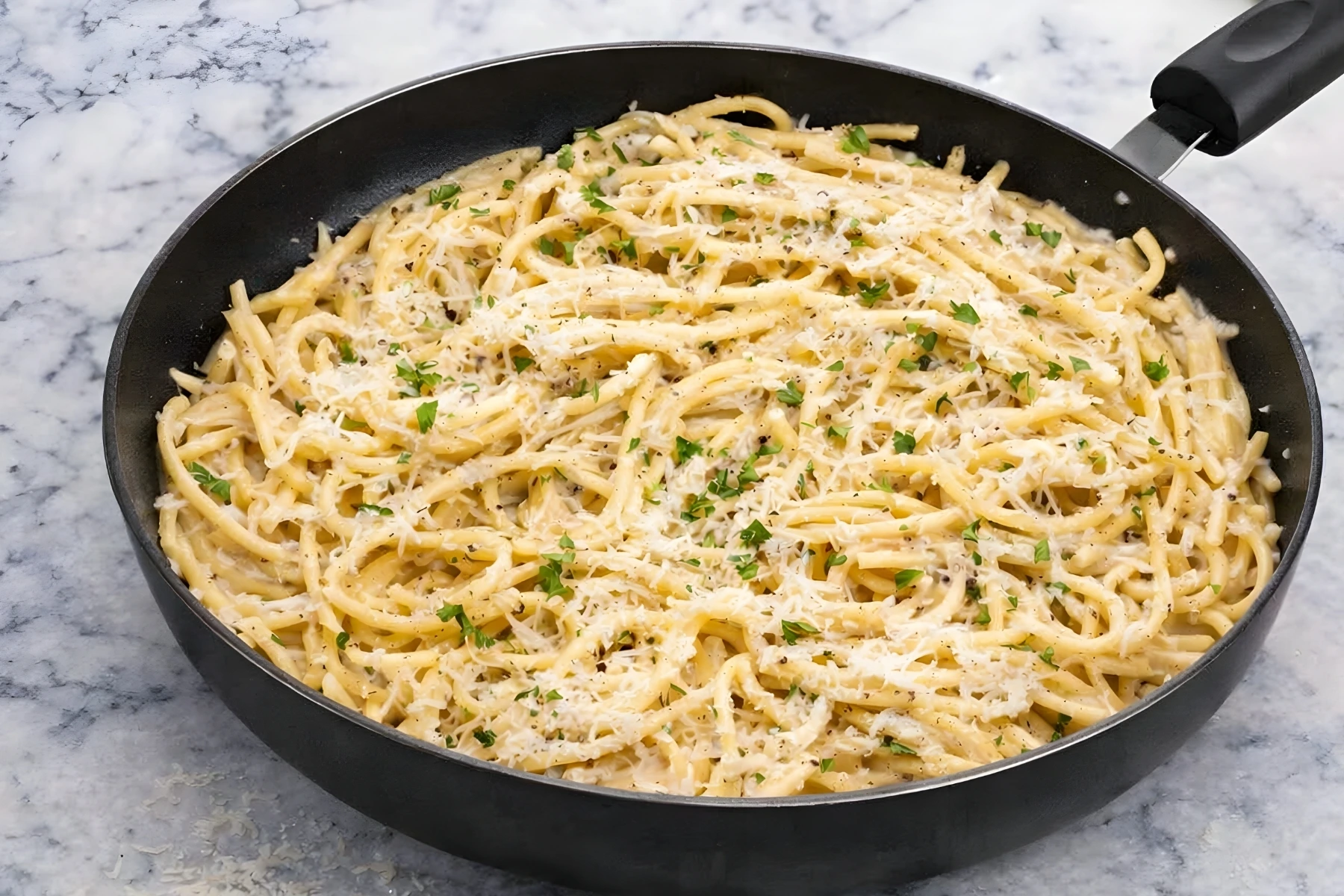
There’s something magical about simple food that delivers big flavor, and Bucatini Cacio e Pepe is one of those meals I come back to again and again. It’s creamy, peppery, cheesy—and the best part? It only takes about 25 minutes from start to finish.
As a mom of two who juggles dinner between after-school chaos and bedtime routines, this dish is a lifesaver. It’s quick, comforting, and every bite tastes like it came straight from a rustic Roman trattoria.
If you’ve never made Cacio e Pepe at home before, don’t worry—it’s easier than it sounds, and I’ll walk you through everything.
Let’s get cozy in the kitchen and make one of Italy’s most iconic pasta dishes your new go-to weeknight favorite.
What is Bucatini Cacio e Pepe?

Cacio e Pepe literally means cheese and pepper in Italian. It’s a traditional Roman dish made with just a few ingredients:
- Pasta (we’re using bucatini—a thicker, spaghetti-like pasta with a hollow center)
- Freshly cracked black pepper
- Pecorino Romano cheese
- Parmesan cheese
- Pasta water
That’s it. No butter, no cream—just technique and a bit of patience.
The starch in the pasta water helps the cheese melt into a silky, clingy sauce that coats every strand. The cracked pepper adds just the right kick to balance out all that richness.
And bucatini? It’s like spaghetti’s slightly extra cousin. I love how it holds onto the sauce while giving a satisfying bite.
If you’re into Italian-inspired comfort food, you might also love trying this Cheesy Broccoli Rice Casserole for another rich, satisfying meal.
Ingredients You’ll Need
Here’s everything you’ll need for this recipe. I recommend grating your cheese fresh—it makes all the difference in flavor and texture.
- 1 lb bucatini pasta (or substitute with thick spaghetti)
- 2 teaspoons fresh cracked black pepper
- 3 garlic cloves, grated
- 1 cup freshly grated Pecorino Romano cheese
- ½ cup freshly grated Parmesan cheese
- ¼ to 1 cup hot pasta water (reserved from cooking)
- Fresh chopped parsley (optional garnish)
- Extra Pecorino and cracked pepper for topping
Why Use Two Cheeses?
Traditionally, Pecorino Romano is the star of Cacio e Pepe. It’s sharp, salty, and perfect for melting. But I like to mellow it out with a little Parmesan. It adds creaminess and a more rounded flavor, which my kids tend to love.
Feel free to adjust the ratio depending on your taste. Love sharp cheese? Go full Pecorino. Want it creamier? Add more Parmesan.
And if you’re looking for more ways to use Parmesan, you’ll definitely want to check out this Parmesan Herb Roasted Acorn Squash for a savory seasonal side.
Step-by-Step Instructions: How to Make Bucatini Cacio e Pepe
You’ll want to prep your ingredients ahead of time, because this recipe moves fast. Trust me—once that pasta’s cooked, everything comes together in a flash.
1. Boil the pasta
Bring a large pot of well-salted water to a rolling boil. Drop in your bucatini and cook for 9 minutes, or just until it’s almost al dente.
Do not drain the pasta.
You’ll be using that starchy cooking water to build your sauce, so have a measuring cup handy and scoop out at least a cup before you start combining everything.
If you’re serving this for a holiday dinner or cozy gathering, consider pairing it with a fresh appetizer like these Tomato Burrata Bites for a colorful and elegant starter.
2. Toast the pepper and garlic
In a large frying pan over medium heat, add the cracked pepper and toast it for about 2 minutes. You’ll start to smell that deep, peppery aroma—it’s amazing.
Then grate in the garlic and stir it around for about 1 minute until fragrant. Garlic isn’t always traditional in this dish, but I think it brings warmth and depth.
3. Add pasta water
Pour ½ cup of hot pasta water into the pan with the pepper and garlic. It’ll sizzle and steam—don’t worry, that’s what you want. Stir it all together.
This water helps build the base of our sauce, and its starchiness helps the cheese melt evenly.
4. Make the cheese mixture
In a bowl, combine your grated Pecorino Romano and Parmesan cheeses.
Add ¼ cup of the hot pasta water and stir until the cheese begins to melt and forms a smooth, creamy paste.
If it’s still too thick, add a bit more hot water until it loosens up. You’re aiming for a silky texture that will easily coat the pasta.
5. Toss the pasta
Using tongs, transfer the cooked bucatini straight into the pan with the pepper mixture.
Add another ½ cup of pasta water, then stir vigorously for 2 to 3 minutes. The pasta will finish cooking in the pan, and the starch will thicken everything up beautifully.
6. Finish with cheese
Turn off the heat but keep the pan on the warm burner.
Add your cheese mixture and toss until the pasta is completely coated in a creamy, glossy sauce.
Taste and adjust—add more cheese, a splash of water if it’s too thick, or more pepper if you want more bite.
7. Garnish and serve
Plate your pasta and top with:
- A sprinkle of chopped parsley
- Extra Pecorino cheese
- A twist of cracked pepper
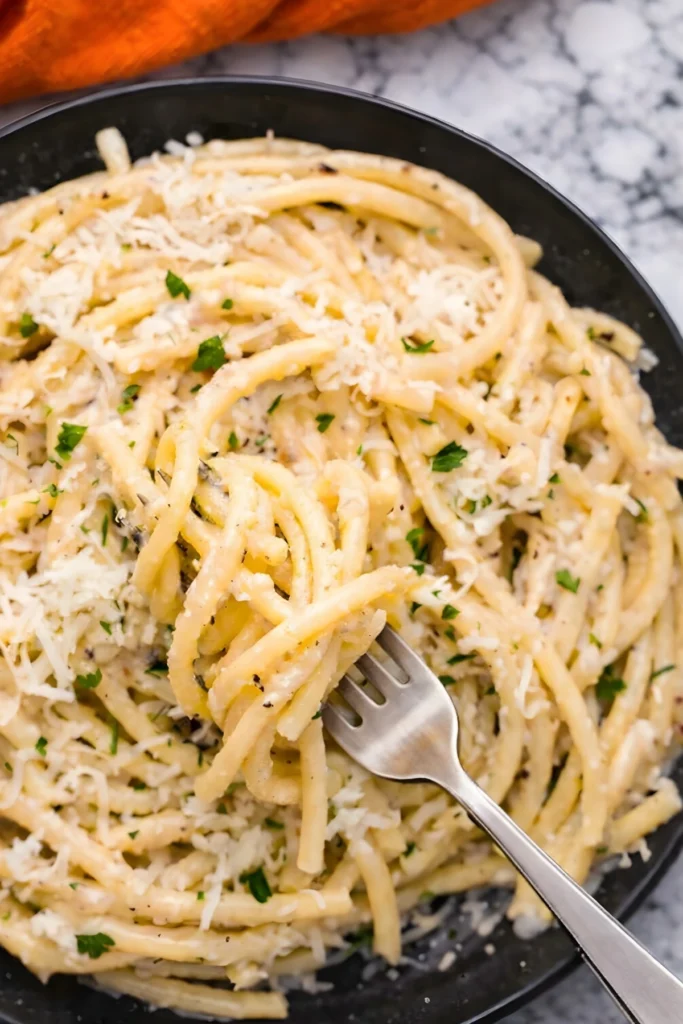
That’s it. Dinner is served, and it’s absolutely dreamy.
Why This Recipe Works for Busy Families
I love how this dish feels elevated, but takes less time than it takes to order delivery. My kids enjoy it, and even picky eaters usually go back for seconds.
It’s also great for when I forget to defrost meat (which happens more than I care to admit). With just pantry staples and a wedge of cheese, I can pull together something that feels thoughtful and filling.
And for even more family-friendly dinner ideas, don’t miss this Creamy Tuscan Chicken—it’s rich, flavorful, and also comes together surprisingly fast.
Tips for Success
Grate your cheese finely
The finer the grate, the smoother your sauce. Chunky shreds don’t melt as well and can lead to clumps.
Use freshly cracked pepper
Pre-ground pepper just doesn’t deliver the same punch. Freshly cracked pepper is essential to that signature flavor.
Control the heat
If your pan’s too hot when you add the cheese, it might clump instead of melting. Keep the pan warm, not sizzling.
Work quickly
Have all your ingredients prepped and ready before your pasta finishes cooking. Timing is everything with this dish.
Variations and Add-Ons
While Cacio e Pepe is traditionally minimalist, you can absolutely play with the recipe to suit your tastes or what’s in your fridge.
Here are a few ideas:
- Add sautéed mushrooms for an earthy twist
- Stir in frozen peas or spinach for color and a veggie boost
- Top with crispy pancetta or bacon for a salty crunch (if you’re okay with pork)
- Swap bucatini for rigatoni, linguine, or even gluten-free pasta
- Use all Parmesan if you can’t find Pecorino (it won’t be traditional, but it will still be delicious)
And if you love a dish that’s cozy and packed with veggies, try this hearty Holiday Veggie Wellington Roast—it’s perfect for dinner parties or meatless Mondays.
Storing and Reheating Leftovers
This pasta is best enjoyed fresh, but if you do have leftovers:
- Store in an airtight container in the fridge for up to 3 days
- Reheat gently with a splash of water or milk to loosen the sauce
- Avoid microwaving too long, as it can make the cheese separate
Why Is My Cacio e Pepe Watery or Clumpy?
This dish is all about balance.
If your sauce is too watery, the heat likely wasn’t high enough when you combined the cheese and pasta. If it’s clumpy, the heat may have been too high or the cheese wasn’t finely grated.
Take your time, adjust as needed, and remember—it’s okay if it’s not perfect. Cooking is about learning, and every attempt gets better.
FAQs About Bucatini Cacio e Pepe
What is the best pasta for Cacio e Pepe?
Traditionally, tonnarelli is used in Rome, but bucatini is my favorite for home cooking. It’s thick, satisfying, and the hollow center holds onto the cheesy sauce beautifully. You can also use spaghetti, linguine, or even rigatoni if that’s what you have on hand.
Can I make Bucatini Cacio e Pepe without Pecorino Romano?
Yes! While Pecorino Romano gives this dish its classic sharp flavor, you can substitute it with Parmesan or a mix of Parmesan and Asiago. Just note that Parmesan is milder and less salty, so you may want to adjust seasoning to taste.
Why did my cheese clump instead of melting?
This is super common when making Cacio e Pepe for the first time. The two biggest reasons are:
The pan was too hot when you added the cheese
The cheese wasn’t finely grated enough
To prevent clumping, remove the pan from direct heat before adding the cheese and stir quickly with a splash of hot pasta water to create a smooth emulsion.
Can I make Bucatini Cacio e Pepe gluten-free?
Absolutely. Just swap the bucatini with your favorite gluten-free pasta. I recommend a rice or corn blend that holds its shape well and doesn’t get gummy. The sauce comes together the same way.
Final Thoughts: Comfort Food with Italian Soul
Bucatini Cacio e Pepe is proof that simple can be spectacular.
It’s bold, creamy, cozy—and you don’t need to be a professional chef to make it. Just a little patience, some quality ingredients, and the willingness to try.
Whether you’re feeding a hungry family or cooking for one, this dish is satisfying, timeless, and always a hit.
So next time you need dinner in a pinch that still feels special, give this one a try.
And if you’re serving a holiday spread or prepping a cozy winter dinner, round out your meal with some fun sides like Creamy Yukon Gold Mashed Potatoes or these festive Loaded Holiday Baked Potatoes.
Save This Recipe for Later!
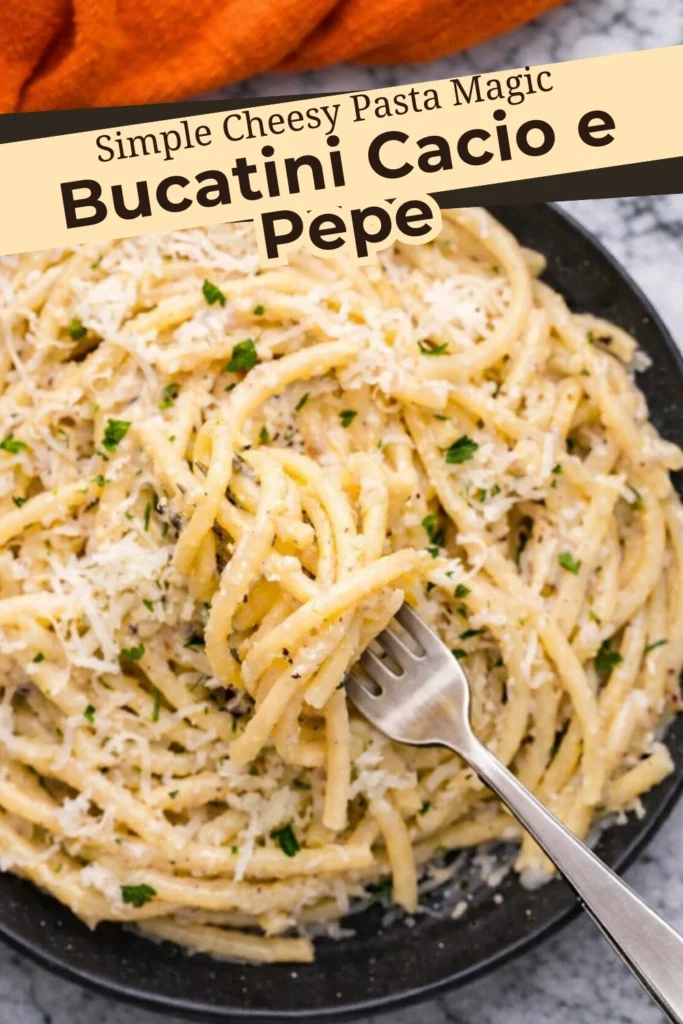
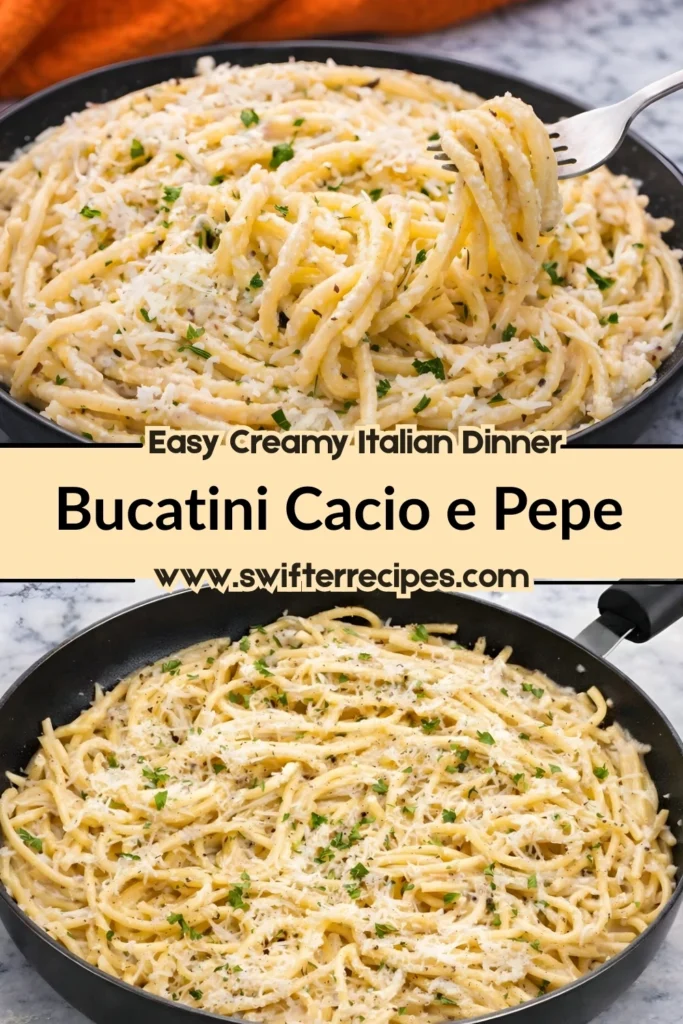
If you loved this recipe or plan to try it soon, don’t forget to pin it on Pinterest.
Sharing your creations helps this community grow and inspires others to cook at home more often.
Have a question or want to share your own version of Bucatini Cacio e Pepe? Drop it in the comments or tag me in your photos—I’d love to see what you whip up!
PrintBucatini Cacio e Pepe
- Total Time: 25 minutes
- Yield: 4 servings 1x
- Diet: Vegetarian
Description
A creamy, peppery, cheesy Roman pasta classic made with just a few ingredients—quick enough for weeknights, comforting enough for slow dinners.
Ingredients
- 1 lb bucatini pasta (or thick spaghetti)
- 2 teaspoons fresh cracked black pepper
- 3 garlic cloves, grated
- 1 cup freshly grated Pecorino Romano cheese
- ½ cup freshly grated Parmesan cheese
- ¼ to 1 cup hot pasta water (reserved from cooking)
- Fresh chopped parsley (optional garnish)
- Extra Pecorino and cracked pepper for topping
Instructions
- Bring a large pot of well-salted water to a boil. Add bucatini and cook for 9 minutes until almost al dente. Reserve at least 1 cup of pasta water—do not drain pasta.
- In a large frying pan over medium heat, toast the cracked pepper for 2 minutes until fragrant. Add grated garlic and sauté for 1 minute.
- Pour ½ cup of hot pasta water into the pan with the pepper and garlic. Stir to combine.
- In a bowl, mix Pecorino Romano and Parmesan with ¼ cup of hot pasta water. Stir until a smooth paste forms. Add more water if needed to reach a creamy texture.
- Using tongs, transfer cooked pasta into the pepper mixture. Add another ½ cup pasta water and stir vigorously for 2–3 minutes until the sauce thickens.
- Turn off the heat but leave the pan on the warm burner. Add the cheese mixture and toss until pasta is fully coated in a creamy sauce. Adjust with more cheese, water, or pepper as needed.
- Serve immediately, garnished with chopped parsley, extra Pecorino, and a twist of cracked pepper.
Notes
Use freshly grated cheese and cracked pepper for the best flavor. Keep heat moderate when adding cheese to avoid clumping. Prep everything before cooking—this dish moves fast!
- Prep Time: 10 minutes
- Cook Time: 15 minutes
- Category: Dinner
- Method: Stovetop
- Cuisine: Italian
Nutrition
- Serving Size: 1 bowl
- Calories: 520
- Sugar: 2g
- Sodium: 550mg
- Fat: 22g
- Saturated Fat: 12g
- Unsaturated Fat: 9g
- Trans Fat: 0g
- Carbohydrates: 62g
- Fiber: 3g
- Protein: 20g
- Cholesterol: 35mg