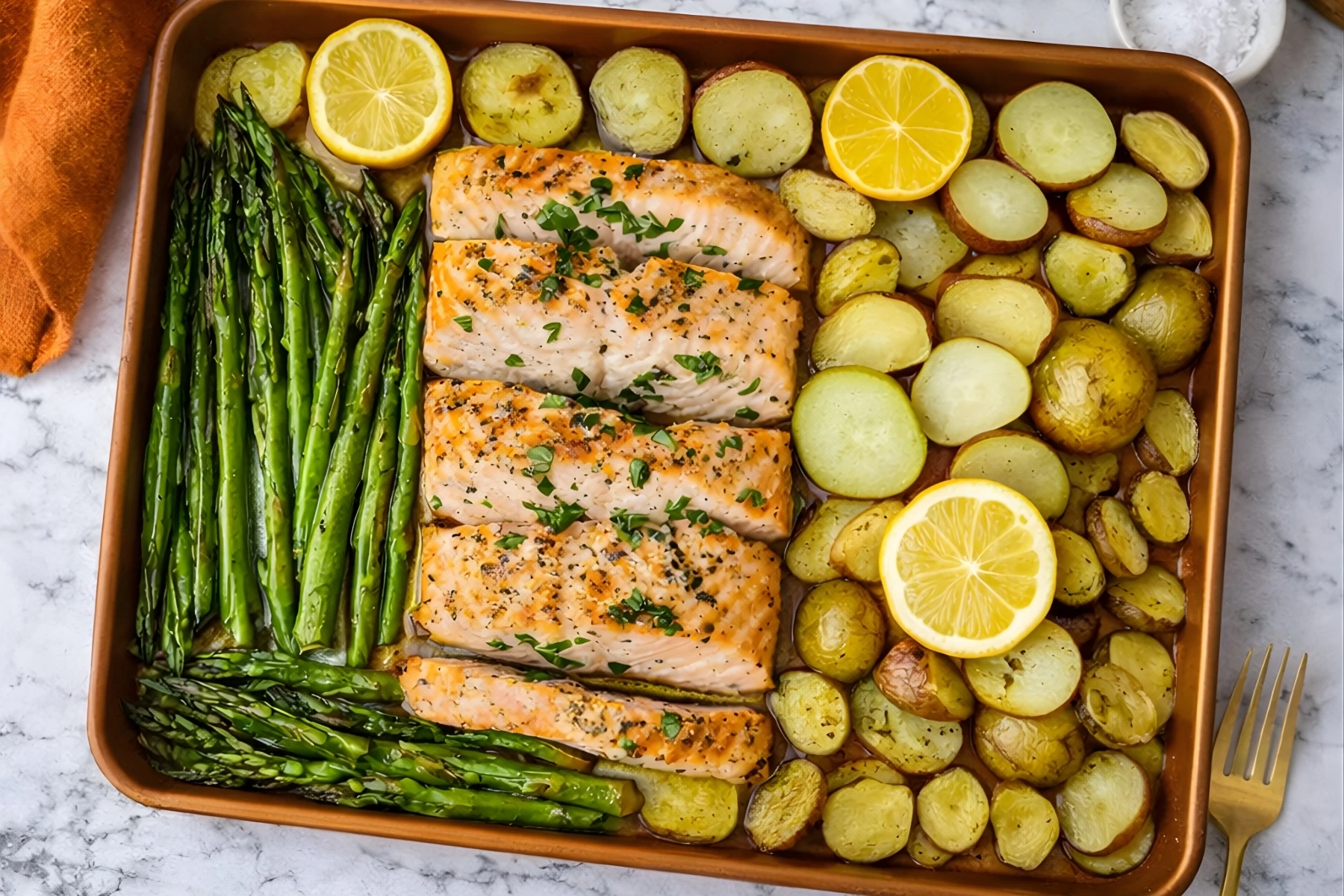
Let me tell you about the night I discovered this sheet pan salmon recipe. It was a typical Wednesday evening, and I was staring into my fridge wondering how I could possibly make something healthy, delicious, and Instagram-worthy in under 30 minutes. That’s when it hit me. Why not throw everything on one pan and let the oven do the work?
Fast forward to today, and this spring sheet pan salmon has become my absolute go-to recipe. My family requests it at least twice a week, and honestly, I’m not complaining. It’s colorful, nutritious, and requires minimal cleanup. What more could a busy woman ask for?
This recipe is perfect for anyone who wants to eat well without spending hours in the kitchen. Whether you’re cooking for picky eaters, impressing your in-laws, or just treating yourself to something special, this dish delivers every single time.
Why This Sheet Pan Salmon Recipe Actually Works
I’ve tried countless salmon recipes over the years. Some were too dry, others too complicated, and many required way too many dishes. This one is different, and here’s why it genuinely works.

Everything Cooks at the Same Rate
The beauty of this recipe is timing. The vegetables need about the same amount of time as the salmon to reach perfection. No juggling multiple pans or trying to coordinate different cooking times. You literally put everything in the oven and set a timer. If you’re looking for another quick salmon option, my garlic butter salmon and broccoli is equally simple.
I learned this the hard way after several dinners where my salmon was perfect but my veggies were still crunchy, or vice versa. The secret is cutting your vegetables to the right size and choosing ones that roast well together.
One Pan Means Less Cleanup
Can we talk about how amazing it is to use just one sheet pan? As someone who used to hate doing dishes, this was a game changer. You prep everything in a bowl, arrange it on the pan, and you’re done. After dinner, it’s one pan to wash. That’s it.
My husband actually started volunteering to do dishes on sheet pan salmon nights. That should tell you everything you need to know. If you love one-pan meals as much as I do, you’ll also want to try my sheet pan chicken pitas with herby ranch.
The Flavors Meld Together Beautifully
When everything roasts together, the salmon juices mingle with the olive oil and lemon, creating this incredible sauce that coats the vegetables. It’s like the ingredients are having a party in your oven, and you’re invited to enjoy the results.
The asparagus gets slightly charred, the cherry tomatoes burst and become sweet, and the bell peppers develop this lovely caramelization. Meanwhile, the salmon stays moist and flaky. It’s pure magic.
What You’ll Need for Perfect Sheet Pan Salmon
Let me walk you through exactly what goes into this recipe. I’m a firm believer in keeping things simple, so you won’t find any weird ingredients here. Just fresh, wholesome food that you can probably grab at any grocery store.
The Salmon
You’ll need four 6-ounce salmon fillets. I usually buy mine with the skin on because it helps hold the fish together during cooking. Don’t stress about finding wild-caught versus farm-raised. Use whatever fits your budget and values.
Here’s a tip I wish someone had told me earlier: look for fillets that are roughly the same thickness. This ensures they all cook evenly. Nobody wants one piece that’s perfect while another is overcooked.
The Spring Vegetables
This is where the recipe really shines. We’re using:
- Asparagus: About 1 pound, which is typically one bunch. I trim off the woody ends, usually about an inch or two.
- Bell peppers: Two of them, any color you like. I often use one red and one yellow for extra color.
- Cherry tomatoes: One cup. These little guys burst in the oven and add the most amazing sweetness.
The vegetable combination isn’t set in stone, though. I’ve made this with whatever was in my crisper drawer, and it always turns out great.
The Seasonings and Extras
Keep it simple with these pantry staples:
- Extra virgin olive oil for richness
- Fresh lemon juice for brightness
- Garlic powder for depth
- Dried thyme for that herbaceous note
- Salt and pepper to taste
I’ve found that dried thyme works better than fresh in this recipe because it distributes more evenly. But if you have fresh herbs, definitely sprinkle them on at the end.
How to Make This Spring Sheet Pan Salmon Step by Step
Alright, let’s get cooking. I’m going to walk you through this exactly how I do it in my own kitchen, with all the little tricks I’ve learned along the way.
Step 1: Get Your Oven Ready
Preheat your oven to 400°F. This is important. Don’t skip preheating. I know it’s tempting to throw everything in and then turn on the oven, but trust me, a properly preheated oven makes a huge difference in how evenly everything cooks.
While the oven is heating up, I usually pour myself a glass of wine. Just saying.
Step 2: Prep Your Vegetables
Wash your asparagus under cold water and snap off the tough ends. There’s this neat trick: hold the asparagus spear at both ends and bend it gently. It will naturally snap where the tender part meets the woody part.
Slice your bell peppers into strips. I aim for about half-inch wide strips, but honestly, as long as they’re roughly the same size, you’re golden.
Give your cherry tomatoes a quick rinse. Leave them whole. They’re perfect just as they are.
Step 3: Season Everything
This is where the magic starts happening. In a large bowl, toss your vegetables with the olive oil, garlic powder, dried thyme, salt, and pepper. I like to use my hands for this. It sounds weird, but you get a much better coating than with spoons or tongs.
Make sure every piece of vegetable is glistening with the seasoning mixture. This is what creates that beautiful caramelization in the oven.
Step 4: Arrange on Your Sheet Pan
Place your salmon fillets skin-side down on the sheet pan. I like to position them so they’re not touching each other. Then surround them with your seasoned vegetables. Try to spread everything out in a single layer as much as possible.
Here’s something I learned after making this recipe dozens of times: don’t crowd the pan. If things are too close together, they’ll steam instead of roast. You want that nice roasted texture, so give everything some breathing room.
Step 5: Add the Lemon
Squeeze fresh lemon juice over everything. I usually squeeze half the lemon over the salmon and the other half over the vegetables. The acidity brightens up all the flavors and helps keep the salmon moist.
Step 6: Roast to Perfection
Pop that pan in the oven and set your timer for 15 minutes. Check it at that point. The salmon should be opaque and flake easily with a fork. The vegetables should be tender with some nice color on them.
If you need a few more minutes, that’s fine. Every oven is different. I usually find that 17 to 18 minutes is my sweet spot, but you’ll figure out what works for your oven.
Step 7: Serve Immediately
Once everything is done, get it on plates right away. I love garnishing with fresh herbs if I have them. Dill, parsley, or even fresh thyme work beautifully.
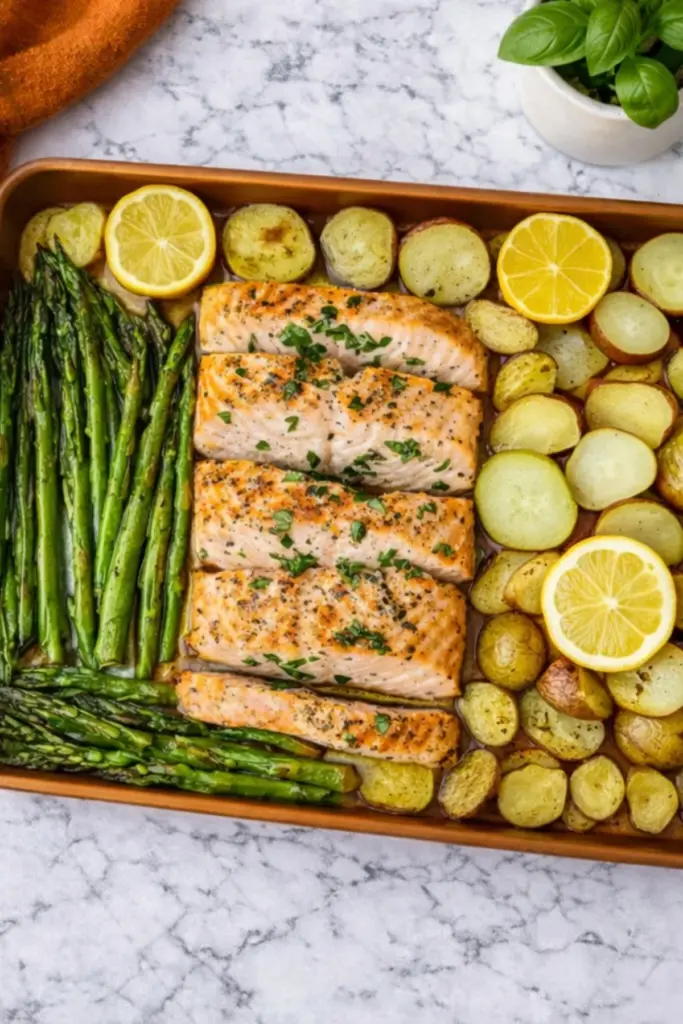
Sometimes I’ll add an extra squeeze of lemon at the table too. You really can’t have too much lemon with salmon.
My Best Tips for Sheet Pan Salmon Success
After making this recipe more times than I can count, I’ve picked up a few tricks that make it even better.
Don’t Overcook the Salmon
Salmon can go from perfectly moist to dry and chalky in just a couple of minutes. Start checking at 15 minutes, and remember that it will continue cooking slightly after you take it out of the oven.
The internal temperature should reach 145°F. But honestly, I rarely use a thermometer anymore. I just press the salmon gently with a fork. If it flakes easily, it’s done.
Use a Quality Sheet Pan
I used to think all sheet pans were the same. Then I invested in a heavy-duty aluminum one with a rim, and wow, what a difference. It heats evenly and doesn’t warp in the oven.
If your pan is thin or warped, your food might cook unevenly. It’s worth spending a bit more on a good pan that will last for years.
Line It or Don’t
Some people swear by parchment paper or foil for easy cleanup. I’ve tried both ways, and honestly, I prefer cooking directly on the pan. You get better caramelization.
But if cleanup is your priority, go ahead and line it. Just make sure you’re using parchment rated for high heat.
Season Your Salmon Separately
Sometimes I’ll sprinkle a little extra seasoning directly on the salmon before it goes in the oven. A pinch of salt, some black pepper, maybe a bit of paprika for color. It’s not necessary, but it does add a nice touch.
Check Your Asparagus
Asparagus thickness varies. If you have really thick spears, you might want to slice them in half lengthwise so they cook at the same rate as everything else. Thinner spears are perfect as is.
Creative Variations to Try
One of my favorite things about this sheet pan salmon recipe is how adaptable it is. Once you master the basic version, you can play around with different flavors and ingredients.
Swap the Protein
Not feeling salmon? No problem. This method works beautifully with:
- Trout fillets
- Cod or halibut
- Chicken breasts (they’ll need about 25 minutes)
- Shrimp (reduce cooking time to 10 to 12 minutes, or try my lemon garlic shrimp and asparagus for a quick weeknight option)
- For chicken lovers, my lemon herb chicken thighs use a similar flavor profile
Change Up the Vegetables
Spring vegetables are wonderful, but you can make this year-round by using whatever’s in season:
- In summer, try zucchini, yellow squash, and corn
- For fall, use Brussels sprouts, butternut squash, and red onions
- Winter calls for broccoli, cauliflower, and sweet potatoes
- Any season works with green beans, carrots, or mushrooms
- Love spring vegetables? Try my spring pea pesto pasta for another seasonal favorite
Just remember to adjust cooking times based on the density of your vegetables. Harder vegetables like sweet potatoes might need a head start in the oven.
Try Different Flavor Profiles
The lemon-thyme combo is classic, but you can switch it up:
- Asian-inspired: use sesame oil, soy sauce, ginger, and garlic
- Mediterranean: add olives, sun-dried tomatoes, and oregano
- Spicy: include red pepper flakes and paprika
- Herb-crusted: top the salmon with fresh dill, parsley, and breadcrumbs
- Maple-glazed: for a sweeter option, check out my maple glazed salmon and green beans
Add a Sauce or Glaze
Sometimes I’ll drizzle a honey-mustard glaze over the salmon halfway through cooking. Or I’ll make a quick yogurt-dill sauce to serve on the side.
A simple balsamic reduction also works wonderfully. Just simmer balsamic vinegar in a small pot until it’s thick and syrupy, then drizzle it over the finished dish.
How to Store and Reheat Leftovers
If you’re lucky enough to have leftovers, here’s how to keep them tasting great.
Storage
Let everything cool to room temperature, then transfer to an airtight container. Store the salmon and vegetables together or separately, whatever works for you.
It will keep in the refrigerator for up to three days. I wouldn’t push it beyond that. Fish doesn’t keep as long as other proteins.
Reheating
Here’s the tricky part with salmon. It can dry out when reheated. My best method is to reheat it gently in the oven at 275°F for about 10 minutes. Cover it loosely with foil to keep moisture in.
Alternatively, you can enjoy the salmon cold. It’s actually delicious on top of a salad or in a grain bowl.
The vegetables reheat beautifully in the microwave or back in the oven.
Freezing
I don’t recommend freezing this dish. The texture of both the salmon and the vegetables suffers after being frozen. This is a recipe best enjoyed fresh or within a couple of days.
FAQns About This Recipe
Can I use frozen salmon?
Yes, but make sure it’s completely thawed first. I thaw mine in the refrigerator overnight. Never cook frozen salmon for this recipe. It won’t cook evenly, and you’ll end up with mushy vegetables and undercooked fish. If you’re looking for other salmon cooking methods, my air fryer salmon is incredibly quick and easy.
What if I don’t like asparagus?
Swap it out! Green beans, broccoli, or snap peas all work well. The key is choosing vegetables that roast nicely and cook in about the same time as the salmon. And if you want to try a different fish preparation altogether, my parmesan crusted white fish is another family favorite.
How do I know when the salmon is done?
The salmon should be opaque throughout and flake easily when you press it with a fork. If you use a thermometer, you’re looking for 145°F in the thickest part.
Can I make this for a crowd?
Absolutely! Just use multiple sheet pans. I’ve made this for dinner parties with up to eight people by using two pans. Just rotate them halfway through cooking for even results.
Why Your Family Will Love This Recipe
Let me tell you why this has become such a hit in my household.
It’s Healthy Without Feeling Like Diet Food
We all know we should eat more fish and vegetables. But sometimes healthy food feels boring or tasteless. This recipe is neither. It’s vibrant, flavorful, and satisfying.
My kids actually request this for dinner. When your kids are asking for salmon and asparagus, you know you’ve struck gold.
It Looks Impressive
When you pull this out of the oven, it looks like something from a restaurant. The colors are gorgeous, and the aroma fills the whole house.
I’ve served this to guests many times, and everyone is always impressed. They don’t need to know how ridiculously easy it was to make.
It Fits Any Eating Style
Whether you’re doing keto, paleo, Whole30, or just trying to eat better, this recipe works. It’s naturally gluten-free, dairy-free, and packed with nutrients.
You’re getting omega-3s from the salmon, fiber from the vegetables, and a rainbow of vitamins and minerals.
It Saves Time and Sanity
On those nights when you’re exhausted and tempted to order takeout, this recipe saves the day. From start to finish, you’re looking at 30 minutes. And most of that is hands-off oven time.
You can use those 20 minutes while it’s cooking to help with homework, fold laundry, or just sit down with a cup of tea.
Final Thoughts on This Sheet Pan Salmon Recipe
This sheet pan salmon and spring veggies has honestly transformed how I approach weeknight dinners. It’s proof that healthy, delicious food doesn’t have to be complicated or time-consuming.
I love that I can customize it based on what’s in my fridge, what’s in season, or what my family is in the mood for. Some nights it’s fancy enough for company. Other nights it’s just a quick Tuesday dinner. Either way, it delivers.
The recipe is forgiving too. Forgot the thyme? Use rosemary or Italian seasoning. Only have broccoli instead of asparagus? Go for it. This is the kind of flexible, real-world cooking that actually works for busy women like us.
My hope is that this becomes one of your go-to recipes too. Make it your own. Experiment with different vegetables and seasonings. Find what works for your family.
And please, if you love this spring sheet pan salmon as much as I do, save it to your Pinterest boards! Pin it to your weeknight dinner board, your healthy recipes board, your easy meal planning board. Share it with your friends who are always asking for simple dinner ideas.
Cooking should be joyful, not stressful. This recipe is my gift to you for those nights when you want something wonderful without all the fuss. Here’s to delicious, easy dinners and the time they give us back to enjoy with the people we love.
Happy cooking, and I can’t wait to hear how it turns out for you!
Print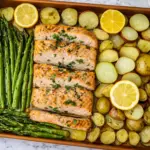
Sheet Pan Salmon and Spring Veggies
- Total Time: 28 minutes
- Yield: 4 servings 1x
- Diet: Gluten Free
Description
This spring sheet pan salmon is healthy, colorful, and incredibly easy to make. Everything roasts together on one pan for a fresh, flavorful dinner with minimal cleanup.
Ingredients
- 4 salmon fillets (about 6 ounces each, skin-on)
- 1 pound fresh asparagus, trimmed
- 2 bell peppers (any color), sliced into strips
- 1 cup cherry tomatoes
- 2 tablespoons extra virgin olive oil
- Juice of 1 fresh lemon
- 1 teaspoon garlic powder
- 1 teaspoon dried thyme
- Salt to taste
- Black pepper to taste
Instructions
- Preheat the oven to 400°F.
- Wash and trim the asparagus, slice the bell peppers, and rinse the cherry tomatoes.
- In a large bowl, toss the asparagus, bell peppers, and cherry tomatoes with olive oil, garlic powder, dried thyme, salt, and pepper.
- Place the salmon fillets skin-side down on a large sheet pan.
- Arrange the seasoned vegetables around the salmon in a single layer without overcrowding.
- Squeeze fresh lemon juice evenly over the salmon and vegetables.
- Roast in the oven for 15–18 minutes, or until the salmon is opaque and flakes easily with a fork.
- Remove from the oven and serve immediately, optionally garnished with fresh herbs and an extra squeeze of lemon.
Notes
Cut vegetables evenly so everything roasts at the same rate. Avoid overcooking the salmon to keep it moist and flaky. Do not overcrowd the pan to ensure proper roasting instead of steaming.
- Prep Time: 10 minutes
- Cook Time: 18 minutes
- Category: Dinner
- Method: Roasting
- Cuisine: American
Nutrition
- Serving Size: 1 fillet with vegetables
- Calories: 380
- Sugar: 5g
- Sodium: 420mg
- Fat: 22g
- Saturated Fat: 4g
- Unsaturated Fat: 16g
- Trans Fat: 0g
- Carbohydrates: 12g
- Fiber: 3g
- Protein: 34g
- Cholesterol: 85mg