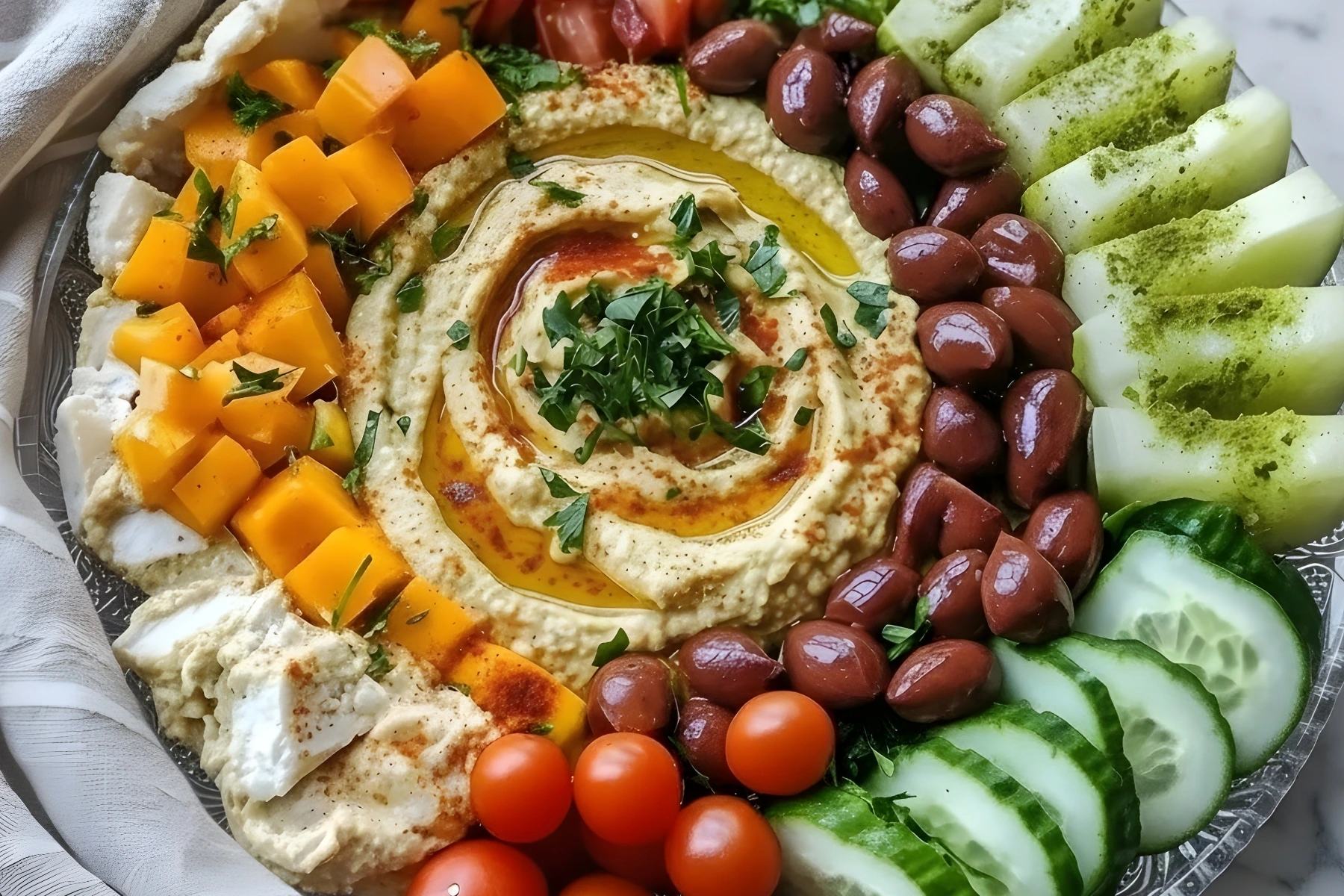
If there’s one thing I’ve learned about hosting, it’s that simple, colorful food brings people together. This Greek Hummus Platter is one of my go-to recipes for family dinners, casual get-togethers, or even lazy Sunday afternoons.
It’s wholesome, fresh, and feels like something you’d find in a cozy Mediterranean kitchen. The creamy homemade hummus, crisp vegetables, salty olives, and warm pita chips make this platter the kind of snack board that everyone keeps coming back to.
If you enjoy Mediterranean flavors, you might also love my Greek Chicken Souvlaki — it pairs beautifully with this platter for a complete Greek-inspired meal.
I love that it’s easy enough for beginners, yet still feels elegant enough for entertaining. And if you’re anything like me, you’ll enjoy the little ritual of arranging everything beautifully on a board. It feels creative and grounding.
Why You’ll Love This Greek Hummus Platter

There are so many reasons this Greek Hummus Platter has become a staple in my kitchen.
- It’s healthy, colorful, and crowd-pleasing.
- You can prepare most of it ahead of time.
- It works perfectly for kids, friends, or guests with dietary preferences.
- It’s customizable — make it your own every time.
If you’ve ever felt intimidated by homemade hummus, don’t worry. I’ll walk you through every step and share a few tricks I’ve learned after making this recipe countless times.
If you’re exploring other easy Mediterranean dishes, you’ll also enjoy my Homemade Falafel Recipe — crispy on the outside, soft on the inside, and a perfect companion to this hummus platter.
Ingredients You’ll Need for the Perfect Greek Hummus Platter
For the Creamy Hummus
- 1 cup dried chickpeas (or 2 cans, drained and rinsed)
- 1 teaspoon baking soda (½ for soaking, ½ for cooking)
- ½ cup good-quality tahini
- ¼ cup fresh lemon juice
- 2–3 garlic cloves
- ½ teaspoon salt (add more to taste)
- ¼ cup ice water (add slowly for texture)
- 2 tablespoons extra virgin olive oil (plus more for drizzling)
- Optional toppings: paprika, chopped parsley, pine nuts, or sumac
For the Greek Platter
- 1 cucumber, sliced
- 1 pint cherry tomatoes, halved or whole
- 1 cup Kalamata olives, pitted
- 1 bag pita chips or toasted pita wedges
Optional Additions and Garnishes
- Crumbled feta cheese
- Pepperoncini peppers
- Thinly sliced red onion
- Sliced bell peppers
- Baby carrots or carrot sticks
- Fresh herbs such as parsley, mint, or oregano
- Lemon wedges for squeezing
- A final drizzle of olive oil
For a little variety, I sometimes serve this alongside my Mediterranean Chickpea Salad — it’s another easy, vibrant side dish that makes the table pop with color and freshness.
How to Make the Creamiest Hummus
When I first started making hummus from scratch, I used canned chickpeas and thought that was enough. But the first time I tried using dried chickpeas, I couldn’t believe the difference — it was creamier, silkier, and had a richer flavor.
Here’s exactly how to make the best hummus you’ve ever had.
Step 1: Soak the Chickpeas
Rinse the dried chickpeas and place them in a large bowl with about 8 cups of water and 1 teaspoon of baking soda. Let them soak overnight. This step softens the chickpeas and helps them cook faster.
If you forget to soak them, you can do a quick soak by boiling them for 5 minutes, then letting them sit for an hour.
Step 2: Cook the Chickpeas
Drain and rinse the soaked chickpeas. Add them to a pot with 6 to 8 cups of fresh water and ½ teaspoon baking soda. Bring to a boil, then lower the heat and simmer for 45 to 60 minutes, until the chickpeas are so tender they almost fall apart.
I like to mash one with a fork to check. If it’s soft all the way through, they’re perfect.
Step 3: Peel for a Silky Texture (Optional but Worth It)
If you want ultra-smooth hummus, peel the chickpeas while they’re still warm. Gently pinch each one between your fingers and the skin will slip right off. It takes a little patience, but the result is so worth it.
When I’m short on time, I skip this step and still end up with delicious hummus — just a little more rustic.
Step 4: Blend Until Smooth
Add the chickpeas, tahini, lemon juice, garlic, and salt to a food processor. Blend for at least 2 minutes, stopping to scrape down the sides.
Then, with the motor running, drizzle in ice water a tablespoon at a time until it becomes fluffy and creamy. This trick with the ice water gives hummus that cloud-like texture.
Step 5: Taste and Adjust
This is where you make it yours. Add more lemon juice for brightness, more garlic for boldness, or a pinch more salt.
Transfer to a bowl, drizzle with olive oil, and sprinkle your favorite garnish — I love using paprika and a few chopped herbs.
If you enjoy rich Mediterranean comfort foods, try my Delicious Greek Moussaka Recipe. It’s hearty, cozy, and complements the freshness of this platter beautifully.
Assembling Your Greek Hummus Platter
This is the fun part — the moment everything comes together. I like to think of this as edible art. It’s colorful, relaxed, and full of personality.
Step 1: Prepare the Ingredients
Wash and dry the vegetables. Slice the cucumber into rounds or sticks. Halve the cherry tomatoes. Drain the olives.
If you’re using extras like feta or herbs, have them ready to go. The more textures and colors, the more inviting the platter looks.
Step 2: Arrange the Platter
Start with the bowl of hummus in the center. Then add your veggies, olives, and pita chips around it.
You can create sections for each ingredient or mix them up for a more organic look. I usually aim for a mix of shapes and colors — the reds of the tomatoes next to the greens of the cucumbers and the deep purple of the olives.
It’s amazing how a simple layout can make the platter feel like a centerpiece.
For more inspiration on vegetable sides, you’ll love my Parmesan Herb Roasted Acorn Squash — it’s a warm, earthy dish that pairs perfectly with lighter appetizers like this one.
Step 3: Final Touches
Drizzle everything lightly with olive oil and add sprigs of herbs. A few lemon wedges on the side not only look pretty but invite guests to squeeze a little freshness over their bites.
That last drizzle of olive oil ties all the flavors together and makes everything glisten just a little.
Tips for Making It Your Own
Cooking should feel flexible, not strict. Here are some fun ways to switch things up:
- Add roasted red peppers or sun-dried tomatoes to the hummus for a twist.
- Swap pita chips for warm naan or seed crackers.
- Include a small bowl of tzatziki or baba ganoush for variety.
- Use colored carrots or watermelon radish for extra visual pop.
- Sprinkle dukkah or za’atar over the top for an aromatic finish.
If you’re looking for more Mediterranean meal ideas, my Mediterranean Chickpea Salad is another reader favorite that uses many of the same ingredients.
A Family Favorite for Any Occasion
In my house, this platter often makes an appearance on Friday nights when we just want something easy and cozy to nibble on while watching a movie.
My kids love dipping their veggies, and I love that it’s full of protein, fiber, and fresh ingredients. It’s nourishing without feeling heavy.
Whether you’re feeding a crowd or just yourself, this platter brings a sense of togetherness to the table.
Greek Hummus Platter: Nutrition and Serving Tips
A standard serving is around 350 calories, with 20 grams of healthy fat, 3 grams of saturated fat, and 12 grams of protein.
Serve it immediately after assembling, or refrigerate the hummus and prepare the platter right before serving. The hummus will last up to 5 days in the fridge — perfect for quick snacks or lunches.
FAQs About the Greek Hummus Platter
How far in advance can I make a Greek Hummus Platter?
You can prepare most components of your Greek Hummus Platter up to 2 days in advance. The hummus itself actually tastes better after resting overnight because the flavors deepen.
Just keep the chopped veggies stored separately in airtight containers, and assemble the platter right before serving so everything looks fresh and crisp.
Can I use canned chickpeas instead of dried ones?
Absolutely. If you’re short on time, use two 15-ounce cans of chickpeas, drained and rinsed.
The texture will be a little less silky compared to using dried chickpeas, but still delicious. I do this often when I want a quick version of my Greek Hummus Platter and nobody ever complains.
How do I make my hummus extra smooth?
For ultra-creamy hummus, use these simple tricks:
Add baking soda while soaking and cooking the chickpeas — it helps loosen the skins.
Peel the chickpeas before blending (optional but effective).
Use ice-cold water when blending.
Blend longer than you think — at least 2 minutes in a food processor.
If you want a fun twist on flavor, try pairing your hummus with Homemade Falafel for a classic Mediterranean duo.
What should I serve with a Greek Hummus Platter?
Serve it with a mix of crunchy and soft textures — pita chips, warm pita bread, fresh veggies, or even roasted options like Parmesan Herb Roasted Acorn Squash.
It also works wonderfully next to main dishes like Greek Chicken Souvlaki or Delicious Greek Moussaka.
How long does hummus last in the fridge?
Homemade hummus lasts about 4 to 5 days when stored in an airtight container in the refrigerator.
I like to drizzle a thin layer of olive oil over the top before sealing the container — it keeps the surface from drying out and adds a little extra flavor.
Can I freeze hummus?
Yes, hummus freezes surprisingly well. Place it in a freezer-safe container, leaving a bit of space at the top for expansion.
When ready to eat, thaw in the fridge overnight and stir well before serving. The texture may loosen slightly, so blend or whisk it again for smoothness.
Share and Save This Greek Hummus Platter
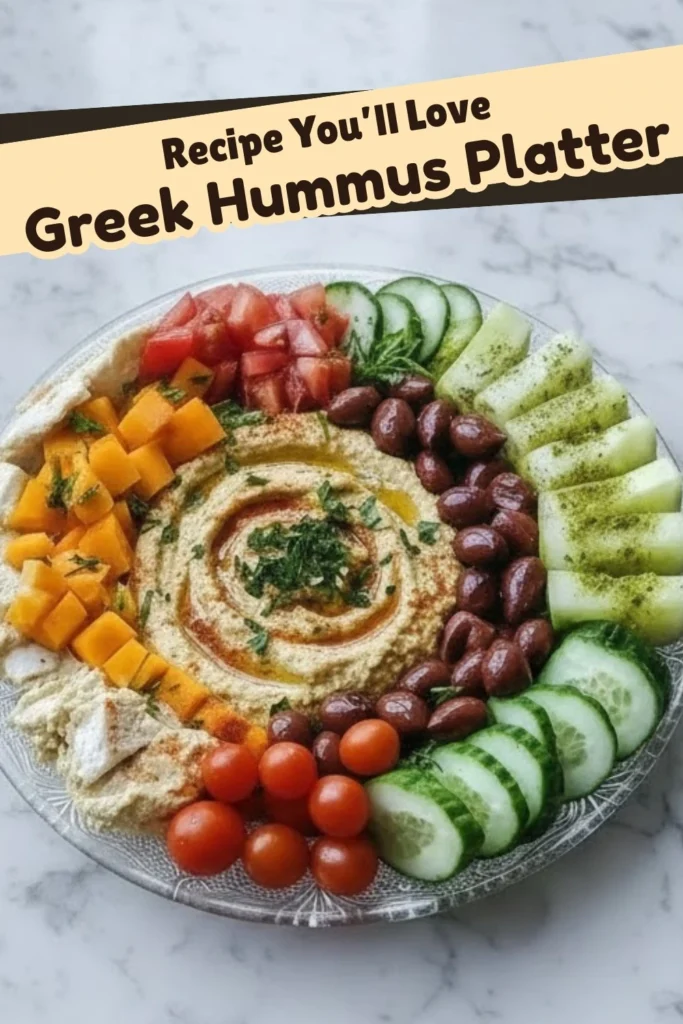
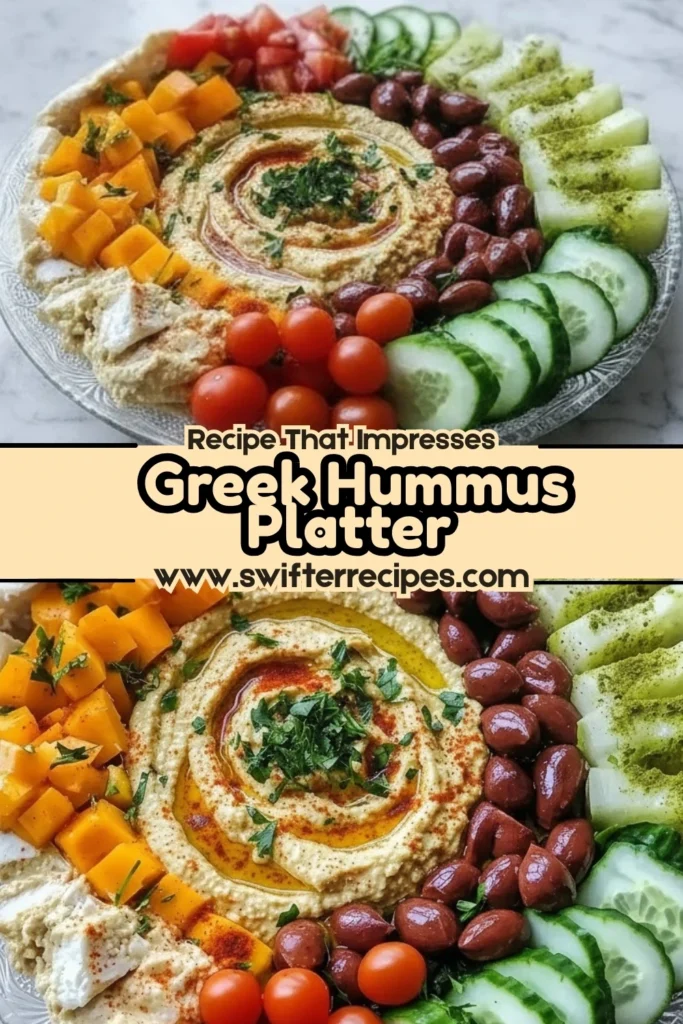
If you make this Greek Hummus Platter, I’d love to hear how it turns out. Try adding your favorite twists, snap a photo, and share it on Pinterest.
Save it to your Healthy Appetizers or Mediterranean Recipes board so you can find it easily next time. Your version might inspire someone else to try it too.
Print
Greek Hummus Platter Recipe
- Total Time: 1 hour 20 minutes
- Yield: 6 servings 1x
- Diet: Vegetarian
Description
This Greek Hummus Platter is a colorful, wholesome, and crowd-pleasing appetizer filled with creamy hummus, crisp veggies, briny olives, and pita chips — perfect for entertaining or casual nights in.
Ingredients
- For the Hummus:
- 1 cup dried chickpeas (or 2 cans, drained and rinsed)
- 1 teaspoon baking soda (½ for soaking, ½ for cooking)
- ½ cup good-quality tahini
- ¼ cup fresh lemon juice
- 2–3 garlic cloves
- ½ teaspoon salt
- ¼ cup ice water (added slowly)
- 2 tablespoons extra virgin olive oil
- Optional toppings: paprika, chopped parsley, pine nuts, or sumac
- For the Platter:
- 1 cucumber, sliced
- 1 pint cherry tomatoes, halved or whole
- 1 cup Kalamata olives, pitted
- 1 bag pita chips or toasted pita wedges
- Optional Garnishes:
- Crumbled feta cheese
- Pepperoncini peppers
- Thinly sliced red onion
- Sliced bell peppers
- Baby carrots or carrot sticks
- Fresh herbs (parsley, mint, oregano)
- Lemon wedges for squeezing
Instructions
- Soak chickpeas overnight in water with ½ teaspoon baking soda. (Or do a 1-hour quick soak.)
- Drain, rinse, and cook chickpeas in fresh water with ½ teaspoon baking soda for 45–60 minutes until very tender.
- (Optional) Peel chickpeas for an extra smooth texture.
- Blend chickpeas, tahini, lemon juice, garlic, and salt in a food processor for 2 minutes. Slowly drizzle in ice water until fluffy and creamy.
- Adjust lemon, garlic, or salt to taste. Transfer to a bowl, drizzle with olive oil, and top with garnishes.
- Wash and prep veggies. Arrange hummus in the center of a large board or platter.
- Surround with sliced cucumbers, tomatoes, olives, and pita chips. Add any optional garnishes you like.
- Finish with a drizzle of olive oil and a few fresh herb sprigs. Serve immediately or chill hummus for later.
Notes
Use canned chickpeas for speed, but dried chickpeas yield smoother hummus. Add variety with tzatziki, baba ganoush, or roasted veggies. Store hummus up to 5 days in the fridge.
- Prep Time: 20 minutes
- Cook Time: 60 minutes
- Category: Appetizer
- Method: Blending
- Cuisine: Mediterranean
Nutrition
- Serving Size: 1 platter portion
- Calories: 350
- Sugar: 5g
- Sodium: 620mg
- Fat: 20g
- Saturated Fat: 3g
- Unsaturated Fat: 16g
- Trans Fat: 0g
- Carbohydrates: 28g
- Fiber: 7g
- Protein: 12g
- Cholesterol: 5mg