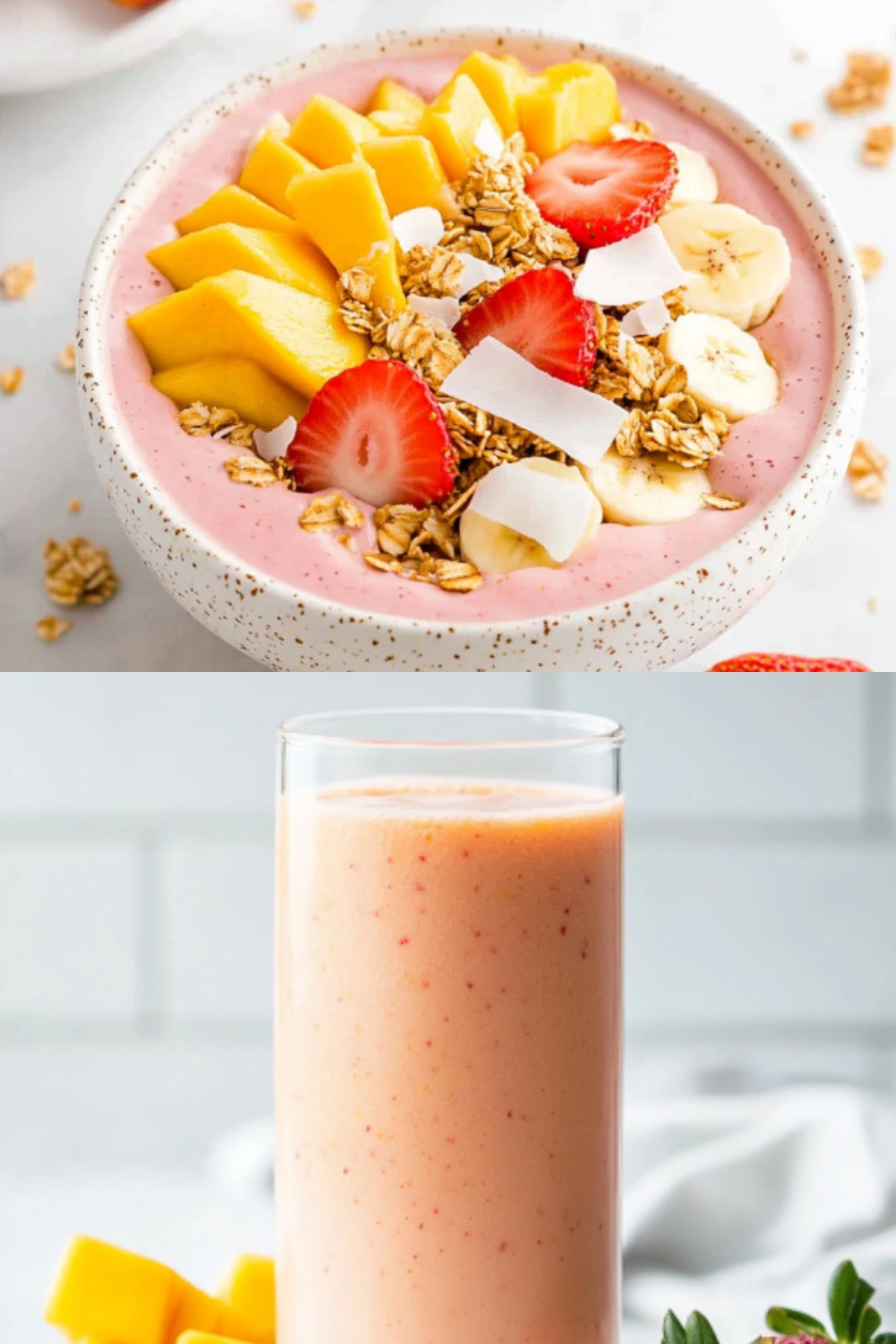
Understanding the practical and visual pros and cons of each format
Smoothie bowl vs smoothie – understanding the practical and visual pros and cons of each format is essential for choosing the right breakfast option. Smoothie bowls and smoothies share ingredients—but not always the same purpose. Whether you’re crafting a thick strawberry mango blend or sipping something portable, the way you serve your smoothie can impact how full you feel, how much nutrition you consume, and how your meal is experienced overall.
In this guide, we’ll compare smoothie bowl vs smoothie across four key areas: nutrition, satiety, presentation, and convenience—so you can choose the best format for your lifestyle.
Want the Perfect Bowl? Get Our Complete Strawberry Mango Smoothie Bowl Guide
Smoothie Bowl vs Smoothie: Texture & Consistency Differences
The biggest physical difference between a smoothie and a smoothie bowl is thickness.
| Format | Consistency | Preparation Notes |
|---|---|---|
| Smoothie | Thin, pourable | More liquid; blended quickly |
| Smoothie Bowl | Thick, spoonable | Less liquid; requires tamper or pulsing |
Smoothie bowls are thicker because they use frozen fruits, banana, avocado, or yogurt with minimal liquid. They’re eaten with a spoon, like soft-serve.
Smoothie Bowl vs Smoothie: Toppings & Nutrition Comparison
Smoothie bowls offer space for toppings, which change both nutrition and eating experience.
Smoothie Bowl:
- Added fiber and texture from seeds, granola, fresh fruit
- Healthy fats from nut butters or coconut
- More customizable for macros (protein, fat, carbs)
Traditional Smoothie:
- Typically blended all together
- Less control over macros
- Harder to include toppings without disrupting texture
For topping ideas and layout inspiration, visit our full guide on Smoothie Bowl Toppings & Styling Tips
According to the Harvard T.H. Chan School of Public Health, fiber-rich foods like those found in smoothie bowl toppings can help improve satiety and digestive health
Smoothie Bowl vs Smoothie: Satiety & Digestion Impact
Eating a bowl takes longer than drinking from a cup—and that’s a good thing.
| Feature | Smoothie Bowl | Smoothie |
|---|---|---|
| Eating Speed | Slow | Fast |
| Chewing Required | Yes (toppings) | No |
| Satiety | Higher (more time to register fullness) | Lower |
If you’re aiming for a healthy breakfast bowl recipe that keeps you full through the morning, smoothie bowls often outperform drinks thanks to fiber-rich toppings and slower intake.
Smoothie Bowl vs Smoothie: Visual Appeal & Presentation
Enter the world of the Instagram smoothie bowl. Presentation matters—and smoothie bowls offer the blank canvas.
Bowls:
- Toppings add layers of color and texture
- Easier to style and photograph
- Popular in wellness content creation
Drinks:
- Great for on-the-go
- Portable but less visually compelling
- Minimal styling options
Smoothie Bowl vs Smoothie: Convenience & Lifestyle Fit
Which one fits better depends on your goals:
| Use Case | Best Format |
|---|---|
| Busy morning commute | Smoothie drink (in shaker or jar) |
| Meal prep for family or kids | Smoothie bowl with toppings |
| Post-workout recovery | Either, depending on satiety needs |
| Social sharing / food blogging | Smoothie bowl (Instagram-ready) |
Which Should You Choose?
Here’s a quick guide:
Choose a Smoothie Bowl if you want:
- A more filling meal
- Control over texture and macros
- A beautiful, layered food experience
Choose a Traditional Smoothie if you want:
- Something fast and drinkable
- Less prep and cleanup
- A lighter, hydrating snack
You don’t have to choose just one. Use the same base recipe and simply adjust the liquid-to-solid ratio to go from bowl to drink—or vice versa. For a step-by-step guide on how to build and style your bowl, check out our article on: strawberry-mango-smoothie-bowl”>Strawberry Mango Smoothie Bowls