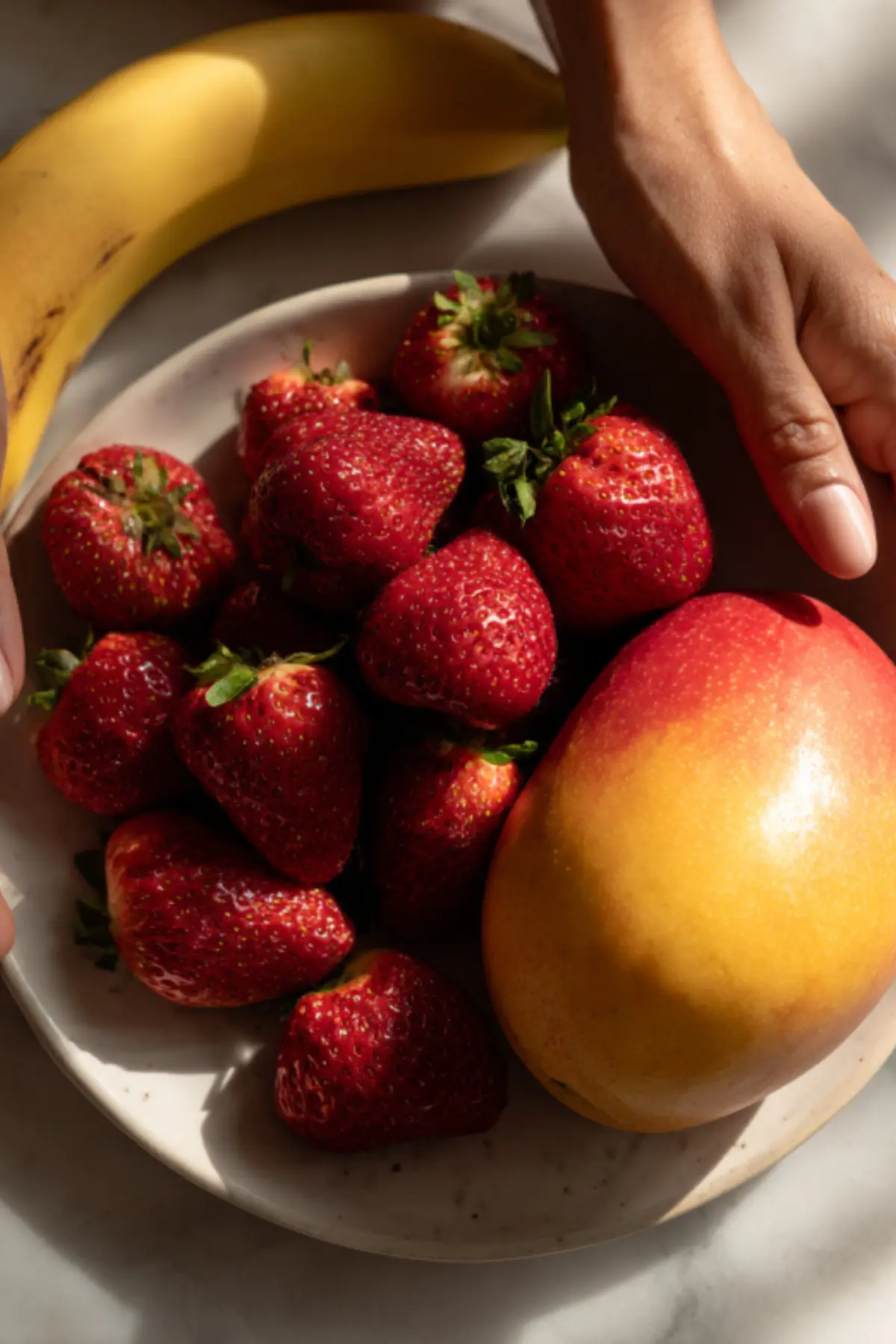
Learning how to reduce sugar in smoothies is easier than you think. Reducing sugar in your strawberry mango smoothies doesn’t mean compromising on flavor. These five proven strategies will help you cut sugar content by 30-50% without anyone noticing the difference. For more details on the nutritional benefits of reducing sugar, check out our complete nutrition breakdown guide.
1. Strategic Ingredient Combinations to Reduce Sugar in Smoothies
The ripeness of your fruit dramatically impacts natural sweetness levels, making this the most important factor in creating low-sugar smoothies.
For Strawberries: Look for berries that are deep red all the way to the stem, with no white or green areas. They should yield slightly to gentle pressure and have a strong, sweet aroma. Learn more about selecting the perfect strawberries for smoothies.
For Mangoes: A perfectly ripe mango gives slightly when pressed near the stem end and has a sweet, fruity aroma. The skin may have wrinkles near the stem, and the fruit should feel heavy. Discover our complete mango selection guide for more tips.
Ripening Hacks:
- Store unripe fruit in a paper bag with a banana to speed ripening
- Leave mangoes at room temperature for 2-5 days
- Freeze fruit at peak ripeness to lock in maximum sweetness
Pro Tip: Overripe fruit that’s too soft for eating fresh is perfect for smoothies, providing maximum sweetness without added sweeteners. This is one of the easiest ways to reduce sugar in smoothies naturally.
2. Use Natural Sweeteners to Reduce Sugar in Smoothies
Replace refined sugars with natural alternatives that provide sweetness plus nutritional benefits. These options help you reduce sugar in smoothies while maintaining incredible flavor.
Monk Fruit Sweetener: Zero-calorie and 150-200 times sweeter than sugar. Start with just 1/8 teaspoon for a single serving. No aftertaste and doesn’t affect blood sugar.
Medjool Dates: Two pitted dates equal 2 tablespoons of sugar but add fiber, potassium, and antioxidants. Soak in warm water for 10 minutes before blending.
Stevia: Intensely sweet – start with 2-3 drops of liquid stevia. Too much creates bitterness, so add gradually.
Natural Boosters:
- Vanilla extract adds sweetness perception without sugar
- Cinnamon enhances sweetness while adding warmth
- Coconut extract provides tropical sweetness perfect with mango
3. Balance Sweetness with Strategic Acid
Adding acidity brightens fruit flavors and makes natural sugars taste more pronounced.
Citrus Power:
- Fresh lime juice (1-2 teaspoons) brightens both fruits without overpowering
- Lemon juice (½ teaspoon) – use sparingly
- Orange zest provides brightness without tartness
Other Options:
- Greek yogurt provides natural tartness while adding protein
- Unsweetened cranberry juice (1 tablespoon) adds tartness and antioxidants
The Science: Acid compounds interact with taste receptors to enhance sweetness perception. The contrast makes your brain perceive more sweetness than actually present.
4. Leverage Naturally Sweet Flavor Enhancers
Certain ingredients amplify sweetness perception without adding sugar.
Frozen Banana: Even ¼ of a frozen banana adds significant natural sweetness plus creamy texture. Use bananas with brown spots for maximum sugar content.
Coconut Products:
- Canned coconut milk makes smoothies taste more indulgent
- Coconut flakes add subtle sweetness and tropical flavor
- Coconut water provides natural sweetness plus electrolytes
Spice Magic:
- Cinnamon makes fruit taste sweeter while adding warmth
- Cardamom provides exotic sweetness perfect with mango
- Nutmeg adds depth and perceived sweetness
Temperature Trick: Serve smoothies slightly less cold to enhance sweetness perception.
5. Strategic Ingredient Combinations
Combine ingredients strategically to create natural sweetness synergies.
The 80/20 Rule: Use 80% naturally sweet ingredients (ripe fruit, banana, coconut) and 20% flavor enhancers (citrus, spices, vanilla).
Protein-Sweetness Balance: Adding protein enhances sweetness perception while creating satiety. Greek yogurt provides tartness that makes fruit taste sweeter by contrast.
Layered Sweetness: Instead of one large sweetener amount, use multiple small sources: ¼ frozen banana + 1 pitted date + ½ teaspoon vanilla extract creates more complex flavor.
Umami Secret: A tiny pinch of sea salt enhances all flavors and makes fruit taste significantly sweeter by suppressing bitter compounds.

FAQ
What’s the easiest way to reduce sugar in smoothies for beginners?
For sugar reduction: Absolutely. Unsweetened almond milk contains only 1-2 grams of naturally occurring sugars per cup, compared to 12-16 grams in sweetened varieties. This simple swap reduces sugar content by 10-15 grams without affecting taste.
Flavor considerations: Unsweetened almond milk has a neutral, slightly nutty flavor that won’t compete with strawberry and mango. If too bland initially:
Add ¼ teaspoon vanilla extract to your smoothie
Use half unsweetened almond milk and half coconut water
Gradually transition from sweetened to unsweetened over a week
Other options: Unsweetened coconut milk (carton), oat milk, and cashew milk all work beautifully.
Pro tip: After 1-2 weeks of using unsweetened alternatives, sweetened versions taste overwhelmingly sugary. Your taste buds adapt quickly.
The key is making gradual changes when you reduce sugar in smoothies. Start with one tip at a time, allow your palate to adjust, then implement the next strategy. Within weeks, you’ll enjoy naturally sweet, health-conscious smoothies that taste just as delicious as high-sugar versions.
Ready to put these tips into practice? Try our classic strawberry mango smoothie recipe using these sugar-reduction techniques, or explore our complete smoothie guide for more healthy variations.