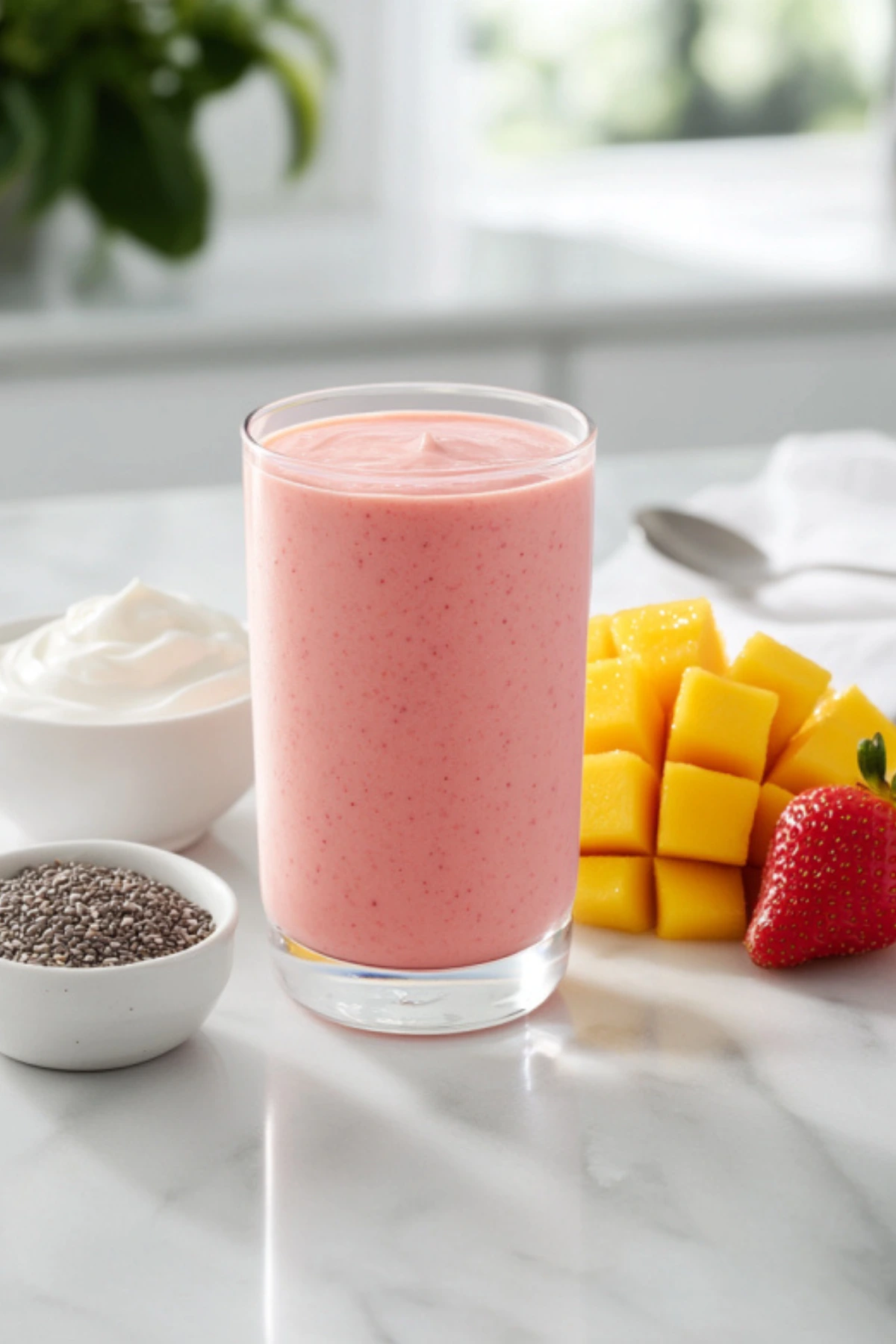
Learning how to add protein to smoothies transforms your basic strawberry mango blend into a nutritional powerhouse without sacrificing taste or texture. The right protein additions enhance creaminess, satiety, and nutritional value while supporting muscle recovery and sustained energy. These proven strategies help you build smoothies delivering 20-30 grams of high-quality protein per serving.
Best Ways to Add Protein to Smoothies: Pros and Cons

Greek Yogurt
Pros:
- High protein: 15-20g per ¾ cup serving
- Creates naturally thick, creamy texture
- Contains probiotics for digestive health
- No chalky powder texture
- Cost-effective and readily available
Cons:
- Contains dairy (not suitable for lactose intolerant/vegan)
- Tangy flavor can overpower delicate fruits
- Limited shelf life
- Protein content varies by brand
Best Practices: Choose plain, full-fat Greek yogurt. Start with ½ cup and look for brands with live cultures. For a complete protein boost that tastes like dessert, try our Protein Boost with Greek Yogurt & Seeds variation that transforms your smoothie into a healthy strawberry mango lassi.
Protein Powder
Pros:
- Concentrated protein: 20-30g per scoop
- Variety of types (whey, casein, plant-based)
- Long shelf life
- Precise protein dosing
Cons:
- Can create chalky, gritty textures
- May contain artificial ingredients
- Can be expensive
- Strong flavors may overpower fruit
Best Practices: Choose unflavored or vanilla varieties. Add after other ingredients to prevent clumping. Use cold liquids and blend thoroughly. Consider pairing with our Vanilla or Cinnamon Infusion to mask any artificial flavors while enhancing natural sweetness.
Seeds (Chia, Hemp, Flax)
Pros:
- Complete nutrition with protein, healthy fats, fiber
- Minimal processing
- Long shelf life
- Anti-inflammatory omega-3s
Cons:
- Lower protein density
- May create gritty textures
- Higher calories due to fat content
- Some require preparation (chia soaking, flax grinding)
Specific Profiles:
- Chia seeds: 5g protein per 2 tablespoons
- Hemp hearts: 10g protein per 3 tablespoons
- Ground flax: 4g protein per 2 tablespoons
How Adding Protein to Smoothies Affects Flavor & Texture
Flavor Impact
- Greek Yogurt: Creates tangy base that enhances fruit sweetness through contrast
- Protein Powder: Unflavored has minimal impact; vanilla enhances natural sweetness
- Seeds: Chia is flavorless; hemp hearts add mild nuttiness; flax can be slightly bitter
Want to explore exciting flavor combinations beyond basic protein? Check out our 10 Flavor-Boosting Variations that complement protein additions perfectly.
Texture Transformation
- Greek Yogurt: Instantly creates thick, milkshake-like consistency
- Protein Powder: Can create foam (whey) or pudding-like thickness (casein)
- Seeds: Chia adds gel-like thickness; hemp hearts provide subtle creaminess
When to Add Protein to Smoothies for Optimal Blending
Greek Yogurt
Add as one of the first ingredients after liquid base:
- Add liquid to blender
- Add Greek yogurt and blend briefly
- Add frozen fruit gradually
- Add fresh fruit and final ingredients
Protein Powder
Add after liquids but before frozen ingredients:
- Add all liquids first
- Add protein powder, blend 10-15 seconds
- Add soft ingredients
- Add frozen ingredients last
Seeds
- Chia: Pre-soak 10+ minutes or add dry and blend well
- Hemp Hearts: Add with soft ingredients before frozen fruit
- Ground Flax: Add with dry ingredients before liquids
Sample High-Protein Recipe
Ultimate Strawberry Mango Protein Smoothie
Serves 1 | Prep Time: 10 minutes | Protein: 28g
Ingredients:
- ¾ cup plain Greek yogurt (2% fat)
- ½ cup unsweetened almond milk
- 1 cup frozen strawberries
- ½ cup frozen mango chunks
- 1 tablespoon hemp hearts
- 1 tablespoon pre-soaked chia seeds
- ½ teaspoon vanilla extract
- ¼ frozen banana (optional)
- ½ cup ice cubes
Instructions:
- Pre-soak chia seeds in 2 tablespoons water for 10 minutes
- Add almond milk and Greek yogurt to blender
- Pulse 3-4 times to combine
- Add vanilla, banana, and chia gel
- Add hemp hearts, blend 30 seconds
- Add frozen fruit gradually while blending
- Add ice, blend 60-90 seconds until smooth
Nutritional Profile:
- Protein: 28g
- Calories: ~350
- Carbohydrates: 35g
- Fat: 8g (healthy fats)
- Fiber: 12g
Customization Options
- Higher protein: Add 1 scoop unflavored whey protein
- Vegan version: Replace Greek yogurt with coconut yogurt + plant protein
- Lower calorie: Use water instead of almond milk
- Thicker consistency: Add more frozen fruit or reduce liquid
- Tropical twist: Try our Coconut or Pineapple Tropical variation for a vacation-in-a-glass experience
- Rich indulgence: Combine with our Nut Butter Creaminess for ultimate satisfaction
Advanced Protein Combinations
The Wellness Warrior
Combine protein with anti-inflammatory benefits using our Carrot & Ginger Kick variation. The earthy sweetness of steamed carrots pairs beautifully with Greek yogurt’s tanginess.
The Green Machine
Boost both protein and nutrients with our Green Power variation. The secret is using the right ratios so you taste pure fruit while getting iron, folate, and vitamin K.
The Exotic Protein Blend
For something completely different, try combining protein sources with our Spice It Up variations. Turmeric with Greek yogurt creates a golden wellness elixir, while cardamom adds Middle Eastern sophistication.
Troubleshooting Tips
- Too thick: Add liquid 1 tablespoon at a time
- Too thin: Add more frozen fruit or Greek yogurt
- Gritty texture: Blend longer or strain before serving
- Too tart: Add natural sweetener or extra banana
- Boring flavor: Explore our Ultimate Combination guide for endless creativity
For comprehensive solutions to every smoothie challenge, check out our complete smoothie troubleshooting guide.
Storage and Prep Tips
Make-Ahead Protein Prep
- Pre-portion Greek yogurt into ¾ cup containers
- Freeze chia seed gel in ice cube trays
- Store hemp hearts in airtight containers
- Pre-mix protein powder with spices for convenience
Flavor Enhancement Storage
Following our Storage Tips for Variation Ingredients:
- Freeze grated ginger in ice cube trays with water
- Pre-portion nut butters into tablespoon sizes
- Store citrus zest in small freezer bags
- Keep spice blends premixed in small jars
Greek Yogurt vs Protein Powder vs Seeds: Quick Comparison
| Factor | Greek Yogurt | Protein Powder | Seeds (Chia/Hemp/Flax) |
|---|---|---|---|
| Protein per serving | 15-20g (¾ cup) | 20-30g (1 scoop) | 4-10g (2-3 tbsp) |
| Cost per gram protein | $0.08-0.12 | $0.15-0.25 | $0.10-0.20 |
| Texture impact | Thick, creamy | Can be chalky | Slightly gritty |
| Flavor impact | Tangy, enhances fruit | Minimal to strong | Neutral to nutty |
| Additional benefits | Probiotics, calcium | Pure protein | Omega-3s, fiber |
| Shelf life | 2-3 weeks | 1-2 years | 6-12 months |
| Best for beginners | ✅ Yes | ❌ No | ⚠️ Maybe |
| Vegan-friendly | ❌ No | ✅ Plant options | ✅ Yes |
Recipe Variations by Goal
- Best Protein Smoothie for Weight Loss
- High Protein Smoothie for Muscle Building
- Vegan High Protein Smoothie Options
FAQs
How much protein should I add to my smoothie?
Aim for 20-30 grams of protein per smoothie for optimal benefits. This amount supports muscle maintenance, keeps you satisfied for 3-4 hours, and provides sustained energy. Start with 15-20g if you’re new to protein smoothies to avoid digestive discomfort.
What’s the best protein source for smoothies?
Greek yogurt is the best protein source for beginners because it creates creamy texture naturally, costs less per gram of protein, and provides probiotics. Advanced users may prefer protein powder for higher protein content (20-30g per scoop) or seeds for additional nutrients like omega-3 fatty acids.
Can I add protein powder and Greek yogurt together?
Yes, you can combine protein powder and Greek yogurt for maximum protein content (35-40g total). Use ½ cup Greek yogurt plus ½ scoop protein powder to avoid overly thick texture. This combination works especially well for post-workout smoothies or meal replacements.
How do I prevent protein powder from clumping in smoothies?
Add protein powder after liquids but before frozen ingredients. Blend for 10-15 seconds before adding other ingredients. Use room temperature or slightly warm liquid, and choose powder specifically designed for smoothies rather than baking protein powders.
Which seeds have the most protein for smoothies?
Hemp hearts contain the most protein at 10g per 3 tablespoons, followed by chia seeds at 5g per 2 tablespoons, and ground flaxseed at 4g per 2 tablespoons. Hemp hearts blend most smoothly, while chia seeds create gel-like thickness that some people prefer.
How long before a workout should I drink a protein smoothie?
Drink protein smoothies 30-60 minutes before workouts for sustained energy, or within 30 minutes after workouts for optimal muscle recovery. Pre-workout smoothies should emphasize carbohydrates with moderate protein, while post-workout versions should prioritize protein content.
Building Your Perfect Protein System
This approach combines multiple protein sources for a complete amino acid profile while enhancing both flavor and texture, creating a nutritionally complete smoothie perfect for pre-workout energy, post-exercise recovery, or meal replacement.
Ready to take your protein smoothies to the next level? Start with our Flavor Journey to discover which variations speak to you most. Whether you’re drawn to the Chocolate Strawberry Mango for indulgent mornings or the Citrus Zing for energizing starts, you’ll never run out of delicious ways to get your protein.
Remember: the best protein smoothie is the one that makes you excited to blend tomorrow morning while supporting your health goals every single day.